上個禮拜,我喺旺角一間鋪頭門口,望住一個兩百幾蚊嘅手機殼發呆。
唔係因為個殼靚。係因為我識做呢樣嘢。
我 1998 年入行做外貿,做過嘅產品多到我自己都數唔清:電子零件、變壓器、塑膠殼、收音機、遙控車、聖誕燈飾、老人機、手錶手機、智能手環。手機殼呢樣嘢,我冇正式做過一單大單,但我做過佢嘅所有鄰居——同一個模具廠、同一批注塑機、同一個華強北檔口、同一條去歐洲嘅櫃。
所以我望住嗰個兩百幾蚊嘅殼,心裡嗰句係:「呢塊嘢,出廠價唔夠二十蚊。」
我唔係想踢爆邊個。做生意嘅,客人肯俾錢,就係佢嘅本事。我係想搞清楚一件事:中間嗰兩百蚊,到底買咗啲咩?
呢條問題我問咗自己幾個禮拜,翻咗一堆公開資料出嚟睇。以下係我睇到嘅嘢,同我睇完之後嘅想法。有啲位我仲未想通,我會照講。
圖片由 AI輔助創作(Z-Image-Turbo)
一、三個品牌,三個唔同嘅故事
要做呢門生意,第一件事係搞清楚:高端手機殼市場入面,價錢最高嗰批人,究竟賣緊咩。
我睇咗三家最有代表性嘅:香港出身嘅 CASETiFY、英國嘅 Mous、深圳嘅 PITAKA。三家人定價完全唔同,但有一個共通點——佢哋都唔係賣殼,係賣一個客人查得到嘅故事。
CASETiFY:賣聯名同社群
佢 2011 年喺香港起家,最初係一個叫 Casetagram 嘅「來圖定制」App,賣 35 美元一個。第一個爆點係英國名廚 Jamie Oliver 曬單。2014 年改名 CASETiFY,由「定制服務」轉去做潮牌。
數字係咁:2021 年營收約 1.2 億美元、賣出 300 萬件。2024 年媒體口徑嘅營收係 36 億元人民幣(呢個係媒體報道,未經審計,我照講清楚)。2025 年佢對外講嘅目標係 30 億美元——大約 215 億人民幣。
官網自己講嘅規模:3 萬幾個設計、30 萬個以上 SKU、超過 100 個合作 IP。價錢分層係呢個樣:
| 層級Tier | 價錢Price |
|---|---|
| 入門(天貓最低)Entry (Tmall floor) | ¥179 |
| 常規主力Core range | ¥300–500 |
| 高端/材質款Premium / material | ¥500–729 |
| 聯名限量Limited collab | ¥1000+(DIESEL ¥4000+,蝙蝠俠 ¥10000+)¥1,000+ (DIESEL ¥4,000+, Batman ¥10,000+) |
| 二手炒作Resale | 村上隆「波漾」盲盒官方 ¥549 → 二手 ¥3000+Murakami blind box ¥549 official → ¥3,000+ resale |
我睇完呢張表,最大嘅感受唔係「貴」,係節奏。
佢唔係賭一個爆款,係用上新頻率去撞命中率。迪士尼、寶可夢、漫威、海賊王、可口可樂、Chiikawa、DIESEL、村上隆——呢啲唔係市場活動,係排產工具。佢用 IP 嘅檔期去定自己嘅生產節奏,唔係等需求嚟。
再加上一個定制器(CASETiFY Studio),客人自己揀殼型、顏色、排版、加字、加相。呢個設計有兩層價值:一,用戶自己生成嗰個 SKU 唔需要備貨;二,佢獨一無二,所以冇得比價。
呢一點,我後面會再講。因為我自己嘅想法,最核心嗰句就係呢一點。
Mous:賣工程證明
英國嘅 Mous,2014 年成立。第一代產品叫 Musicase——可以收耳機線嘅 iPhone 殼,Kickstarter 募到 1.2 萬英鎊。之後產品出咗質量問題,加上蘋果取消耳機孔,賣點一夜歸零。團隊借咗 15 萬英鎊,搬入工廠重做。
2017 年,Limitless 喺 Indiegogo 募資接近 250 萬美元、5.1 萬人支持,係當年手機殼配件類嘅第一名。
2026 財年(媒體口徑,未經審計):營收 3,650 萬英鎊,大約 3.34 億人民幣,按年升 23%;EBITDA 430 萬英鎊,按年升 44%,係成立以來最好。
但佢真正嘅本事唔係數字,係一套每年重複一次嘅公開實驗。
佢自己研發咗一種緩衝材料叫 AiroShock,原理講法係材料內部有肉眼睇唔到嘅微氣泡,跌落嘅時候氣泡壓縮、吸收同分散能量。呢個講法把行業默認嘅「加厚=防摔」換成「換材料=防摔」,直接撐住咗佢嘅定價。
然後佢用一系列極限場景,去幫呢個材料「公證」:45 英尺吊車掟落混凝土、倫敦滑鐵盧橋高空拋擲、2017 年 iPhone 首發日創辦人喺蘋果店門口當眾掟新機、綁上蹦極、直升機同熱氣球、1200 英尺,甚至「由太空邊緣投放」。2026 年連行李箱都拉去 250 米落差、綁喺賽車後面拖。
價錢呢?英國站為主:最薄嘅 Super Thin,iPhone 18 Pro Max 賣 £44.99;透明嘅 Clarity 賣 £54.99;旗艦 Limitless 6.0 嘅芳綸纖維款,iPhone 16 Pro 賣 £54.99,胡桃木款 £64.99,美國站芳綸纖維 iPhone 18 Pro Max 賣 $79.99。套裝(Upgrade Kit / Complete Kit)四檔,由 £62.99 到 £112.99。
你睇——佢冇 IP 溢價,只有結構、材料同功能嘅溢價。同一個系列裡面,材質(織物→胡桃木→芳綸纖維)同功能件(需唔需要相機護盾、支架、卡包)決定 10 到 60 英鎊嘅差價。呢個結構好乾淨。
PITAKA:賣材料科學
深圳嘅 PITAKA,2015 年末由鄭陽輝同幾個設計師、材料專家創立,母公司係深圳市零壹創新科技有限公司。創辦人之前係搖滾樂迷、獨立音樂廠牌合夥人,冇配件行業經驗。公司前台掛住八個字:「寧做異類,不隨主流」。
數字:年營收超過 3 億元人民幣(2025 年報道,轉述品牌方口徑),年銷量接近或突破一百萬件,累計用戶由 165 萬講到官網現稱 200 萬以上,覆蓋 120 幾個國家。專利137 項。200 幾項發明。研發投入每年幾千萬元。
佢賣嘅材料叫芳綸纖維——即係凱夫拉。官網嘅講法係「航空級芳綸纖維」、「強度係鋼嘅五倍、重量係五分一」。呢個講法最狠嘅地方唔係參數,係類比:芳綸纖維係戰鬥機、防彈裝甲車、防彈衣嘅材料。用呢種嘢做手機殼,本身就係一個故事。
價錢:主力殼集中喺 $49.99 到 $79.99(國內大約 ¥298 到 ¥499),係普通手機殼嘅 5 到 10 倍。配件刻意壓喺 $20 到 $60——磁吸手柄 $19.99、磁吸卡包 $34.99、磁吸充電寶 $59.99、車載支架 $59.99。呢個定價唔係為咗賺配件嘅錢,係為咗令「殼+卡包+手柄」凑成一個 $130 以上嘅購物車。
但佢有一條數,我睇完之後反而覺得佢係全場最值得研究嘅一家。
第三方電商情報工具 Grips Intelligence 喺 2026 年 8 月嘅估算(第三方樣本推算,唔係官方數字,我照講清楚):ipitaka.com 月會話大約 120 萬,係消費電子類目典型店鋪(約 4.81 萬)嘅 25 倍;客單價 AOV 高達 $150 到 $175;但月交易數只有 1,868 筆,即係轉化率 0.0% 到 0.5%。而佢嘅直接競品 Rokform,轉化率係 2.5% 到 3.0%。同一份估算仲話,佢 2025 年獨立站年 GMV 大約 350 萬美元,按年跌超過 50%。
呢條數點讀?
我嘅讀法係:流量唔缺,承接能力弱。材料敘事好成功咁吸引咗 120 萬人入嚟,但只得千幾個人掏錢。剩低嗰 119 萬人去咗邊?佢哋睇完,點點頭,然後去咗別處買。
呢件事對我有兩個意義。
第一,講故事唔等於收錢。故事負責把人拉入嚟,但把人變成錢嘅,係另一套嘢:價錢合理、決策簡單、唔需要猶豫、有人肯等。如果我做手工、要客人等三個禮拜,我就更加要處理好「點解值得等」呢條問題,否則我嘅轉化率會比 0.5% 更低。
第二,我自己嘅盤會細好多。我唔會期望 120 萬個月會話。如果我一個月做到幾千個月會話、轉化率有 2%,我已經覺得係一個好健康嘅生意。呢個係兩種完全唔同嘅目標函數——一個追規模,一個追密度。我要嘅係後面嗰個。
佢做得最聰明嘅一件事,係為材料命名。Fusion Weaving 浮織、Mammoth Resin、PitaTap、Lumintex、Cadmyra、SlimBoard。呢啲名詞全部註冊,全部有獨立解釋頁。我做完呢個功課之後寫低一句:有名字嘅工藝可以反覆講,冇名字嘅參數只能講一次。
圖片由 AI輔助創作(Z-Image-Turbo)
三家嘅共通點
我睇完三家,攞起筆,寫咗一句:
高端手機殼賣嘅從來唔係殼。CASETiFY 賣聯名同社群,Mous 賣工程證明,PITAKA 賣材料科學。溢價唔係嚟自塊膠,係嚟自一個客人查得到嘅故事。
「查得到」三個字好重要。
你話你個殼防摔,客人可以摔一次睇下。你話你用芳綸纖維,客人可以去查芳綸纖維係咩。你話你同村上隆聯名,客人可以去睇村上隆係咪真係同你合作。呢啲全部都係可以驗證嘅。而塊膠本身,驗證唔到。
呢個就係我睇到嘅第一個真相:溢價嘅來源係「可驗證性」,唔係「質量」。
講得再白啲。同樣一個殼,成本可能差兩蚊。但一個有故事、一個冇故事,價錢可以差兩百蚊。中間嗰一百九十八蚊,買嘅係「我知道我買咗咩,而且我可以證明我買咗咩」。
但呢個故事有一個好脆弱嘅位,我一定要講。
2024 年 4 月,英國廣告標準局(ASA)裁定 Mous 嘅一個電視廣告違規。廣告內容係 50 個人同時將套住 Mous 殼嘅手機掟向空中。裁決指出:參與者除咗 3 個付費演員之外,大部分係 Mous 嘅員工、朋友同家人,唔構成獨立測試;手機亦冇被拆開檢查內部損傷;而品牌提供嘅內部跌落報告係 120cm 高度、26 次跌落,同廣告顯示嘅高度差距太大。ASA 認定廣告誇大功效、具誤導性,違反 BCAP 3.1、3.9、3.12,要求唔可以再用原本形式播出。
呢件事對做品牌嘅人係一堂好貴嘅課:故事講得越大,就越要撐得住。你講 250 米,就要有人信你真係掟過 250 米。撐唔住嘅時候,之前所有故事都會一齊貶值。
二、90% 嘅人拼價,死喺拼價
上面三家係金字塔尖。我而家講下面。
呢個行業有幾大?全球手機殼市場,2025 年大約 163.1 億美元,2026 年大約 172.6 億美元,複合年增長率 5.8%,預計 2030 年去到 216 億美元(The Business Research Company 口徑)。亞太係 2025 年最大嘅區域市場。另一份報告(貝哲斯諮詢)話 2028 年全球去到 1290 億元人民幣、複合增速 4.36%——兩份報告口徑唔同,增速唔可以混住用。
盤子唔細。所以好多人衝入嚟。
但同一份公開資料裡面有一條數字,我睇完坐低咗:
1688 數據顯示,手機殼、數據線等標品中,超過 68% 產品共用公模方案,行業平均毛利率跌穿 15%。
68% 共用公模。毛利率跌穿 15%。
我做咗 26 年外貿,我知 15% 毛利意味住咩。意味住你出一次貨,扣咗運費、匯率、退貨、賬期利息、客人壓價,你手上淨落嚟嘅可能係負數。意味住你唔可以請一個好嘅設計師,因為佢一個人嘅薪水就食咗你一批貨嘅利潤。意味住你唔可以做好材料,因為好材料貴,客人唔肯加錢。
然後就係一個死循環:冇錢做好嘢 → 只能拼價 → 更加冇錢做好嘢。
我見過呢個循環喺好多行業發生。我做過嘅聖誕燈飾、USB 風扇、藍牙耳機,全部行過同一條路。開始嘅時候大家賺錢,跟住有人減價搶單,跟住所有人都減,跟住成行跌到得返幾個點,最後死剩幾間做規模嘅同幾間做品牌嘅。
呢個行業仲有一個好殘忍嘅特性:季節性極強,而且窗口極短。
睇幾條數字:
- iPhone 18 Pro/iPhone Duo 發布首周,天貓平台相關配件搜索量暴漲 600%,手機殼周環比成交額增幅超過 300%;
- 速賣通:8 月起 iPhone 18 系列配件搜索量較 7 月上漲 182%;
- 截至發布會當日,速賣通僅手機殼、屏幕保護膜兩類新增商品就超過 30 萬件;
- TikTok Shop 上,話題 #iPhoneduo 相關短視頻突破 4.29 萬條。
呢四條數字放埋一齊睇,畫面好清楚:需求喺一兩個禮拜裡面爆,但同時有 30 萬件新商品一齊衝入嚟搶。
你唔夠快,你就食唔到。你夠快但同質化,你就只能減價。你減價,你就係嗰 68% 裡面嘅一個,然後你嘅毛利跌穿 15%,然後你就係「拼價死喺拼價」嗰批。
有趣嘅係,同一份德國市場嘅 Google Trends 數據顯示咗一個反向現象:當「iPhone」(換機)嘅搜索指數由年平均 48.73 跌到 42.0(年均值嘅 0.86 倍)嘅時候,配件詞「Handyhülle」(手機殼)嘅相對指數係 1.0,反而高過佢 12 月均值 0.88(比值 1.13),30 天動量係正數。
呢條數講咗一件事:換機嘅熱情會退,但「我想我部舊機靚啲、好啲」嘅需求唔會退。而且同一份數據顯示,手機殼嘅搜索人群係偏女性(男女比 0.80),iPhone 嘅搜索人群偏男性(1.02),兩邊嘅核心年齡段都係 35 到 44 歲。
呢個發現對我嚟講好有用。因為佢意味住:呢門生意唔一定要綁死喺新機發布度。新機係快錢,但存量機係長尾。而我打算做嘅嘢,本質上係長尾生意。
圖片由 AI輔助創作(Z-Image-Turbo)
三、我嘅睇法:唔同嘅一種做法
以下呢段,係我自己嘅想法,唔係市場共識。我會盡量講得坦白,包括我唔確定嘅位。
既然溢價嚟自「可驗證嘅故事」,咁下一步嘅問題就係:我可唔可以講一個唔同嘅故事?
上面三家講嘅,分別係聯名、工程、材料。三種都係「我比你好」嘅故事——我嘅 IP 靚啲、我嘅測試狠啲、我嘅材料高級啲。
我心裡面嗰種,係第四種:手工。
1. 材料係產品,唔係成本
我做外貿最耐嘅一個習慣,係睇成本表。做手機殼,注塑殼嘅材料成本可能佔售價唔夠 5%,所以大部分廠商嘅做法係「先定價,再倒推用咩料」。
我想做嘅係倒轉:先定材料,再定產品。
呢個做法喺短期係蠢嘅。因為好材料會推高成本,而客人未必肯即刻加錢。但 PITAKA 嘅做法證明咗,材料敘事係可以撐起 5 到 10 倍嘅價差。佢 2016 年就做全球第一款磁吸芳綸纖維手機殼,2017 年建立 MagEZ 磁吸產品線,比蘋果推出 MagSafe 早三年。先發者可以做嘅事,係搶命名權——搶到命名權,你就唔係「做殼嘅」,你係「定標準嘅」。
HANDSOME 而家只做三種材質:芳綸纖維、頭層皮革,同工程化防摔。芳綸纖維係 PITAKA 走得最前嘅一段路,我唔打算喺佢嘅地盤上同佢鬥。我心裡面想嘅係另一批材料:頭層皮革、木、竹、再生纖維、天然橡膠。呢批材料嘅共通點係——佢哋每一塊都唔同,而且佢哋會老。
會老,係一個好重要嘅特性。一塊膠十年之後仲係嗰塊膠。一塊皮一年之後有一層你自己養出嚟嘅包漿。呢個係「時間」幫你講故事,你唔需要自己講。
2. 一次做一個
呢一點係我最有信心、同時最心虛嘅一點。
心虛嘅地方好明顯:一次做一個,你點可能做到量?
我認真諗過呢條問題,諗咗好幾日。我嘅答案分三層:
第一層:如果我唔需要「量」呢?
上面講過,1688 數據顯示 68% 共用公模、行業平均毛利跌穿 15%。呢個結構下,「量」係一個陷阱——你做得越多,你越要拼價;你越拼價,你越冇錢做好嘢。規模係保護傘,但同時係枷鎖。
而手工嘅訂單,係另一種經濟:客人落單,然後等。佢等嘅期間,你唔需要備貨,唔需要壓資金,唔需要擔心賣唔出。佢願意等,係因為佢要嗰個「獨一無二」。呢個同 CASETiFY 定制器嘅邏輯一樣——用戶自己生成嗰個 SKU,冇得比價。
第二層:我可以做到「一個接一個」嘅量,但唔係「一次過十萬個」嘅量。
呢個係手工嘅本質。一個師傅一日做五個,一年做一千二百個。一百個師傅,一年十二萬個。呢個數字比起 CASETiFY 一年賣 1500 萬個(2022 年口徑),係零頭。
但反過來講:十二萬個 x 一個好嘅單價,同 1500 萬個 x 一個被壓到穿嘅單價,邊個好賺?我算唔到一個準確答案,因為我冇佢嘅成本表。但我做過太多薄利多銷嘅單,我知答案通常唔係「多」。
第三層:或者我真係唔需要做到「量」。而呢個可能就係重點。
如果呢門生意嘅目標係「成為一間大公司」,咁手工模式係死路。但如果目標係「一個可以養活一班手藝人、做三十年的小生意」,咁規模就唔係目標,係副作用。
我今年五十幾歲。我唔想再建一間靠減價生存嘅廠。我想建一樣嘢,係我退休之後仲有人肯做落去嘅。呢個可能要嘅唔係量,係時間。
3. 一個國家一個工作室
呢個係我嘅佈局想法,講出嚟好多人第一個反應係「你發夢」。
大致係咁:
- 材料由香港供應。唔係喺香港生產,係喺香港採購、驗貨、集運、結算。
- 每個國家大約一個工作室。歐洲、美國、東南亞、非洲,逐個地方落地。
- 師傅教學徒,手傳手。唔係開班收學費,係工作室裡面邊做邊學。
- 一次做一個,小批量,接單先做。
- 輕、薄、靚。唔做笨重嘅防摔盔甲。
- 做自己嘅品牌,亦做 OEM/ODM 工作室。自己嘅品牌做口碑,代工做現金流。
- 幫當地工作室起步嘅資金。唔係貸款,係一種前期投入。
呢個模式嘅真正護城河,唔係技術。
呢句我一定要講清楚。呢門手藝本身,冇咩驚天動地嘅技術。一個師傅教三個月,一個聰明嘅學徒就學識基本。技術從來唔係護城河。
真正嘅護城河係信任成本。
你喺泰國開一間工作室,你要解決嘅唔係「點做」,係:
- 當地邊個師傅肯信你,肯教你嘅人?
- 當地邊個客人肯信你,肯等三個禮拜?
- 當地嘅材料商肯唔肯俾你一個月賬期?
- 當地嘅房東、稅局、海關,你搞唔搞得掂?
- 匯率一跳,你點算?
呢五條問題,每一條都唔係技術問題,係關係問題。
而呢五條問題嘅總和,就係「信任成本」。我想講清楚呢個詞係咩意思,因為佢係我成篇文最核心嘅一個概念。
想像你喺一個新市場開工作室。第一日,你請咗三個師傅。你唔識佢哋,佢哋唔識你。你落一張單,佢哋交貨——你會唔會檢查每一件?會。佢哋報一個價——你會唔會格價?會。佢哋話材料唔夠——你會唔會懷疑佢哋中間食咗?會。
呢啲全部係成本。而呢啲成本之所以存在,係因為冇信任。
信任低嘅時候,品質係一件好貴嘅事:你要驗貨、要抽檢、要簽合同、要押款、要派人睇住、要請第三方驗廠。你每一步都要防。
信任高嘅時候,同一件事嘅成本會掉到好低:你唔需要每一次都驗,因為佢知道你知道佢唔會呃你。呢個差額,就係我口中嘅「信任成本」——佢唔係一個道德詞,係一個實實在在嘅成本項,可以計,可以省。
而我做咗 26 年外貿,最熟嘅就係呢種問題。
1998 年我入行,喺廣州一間外貿公司。2009 年,德國客戶 KTL 派咗人嚟我哋廣州公司駐廠兩三個月,就為咗一個四頻老人機項目。2000 年代初喺廣州小北,一個非洲女客嘅手機喺酒店被人偷咗,我蝕底賠咗一單——後來佢屋企人做咗非洲一個國家嘅總統親屬。2008 年,紐約設計師 Stephanie 飛嚟廣州,要我把手錶手機鑲 400 粒鋯石。2005 年,有個外國客拎住件手錶手機樣板過嚟,開價 5000 蚊叫我幫佢落地。
呢啲單,冇一單係靠技術贏返嚟嘅。全部係靠「我信你」三個字。
所以「一個國家一個工作室」呢句說話,聽落好似係一個供應鏈設計,實際上係一個信任網絡嘅設計。而建立信任網絡,係我唯一真正識做嘅事。
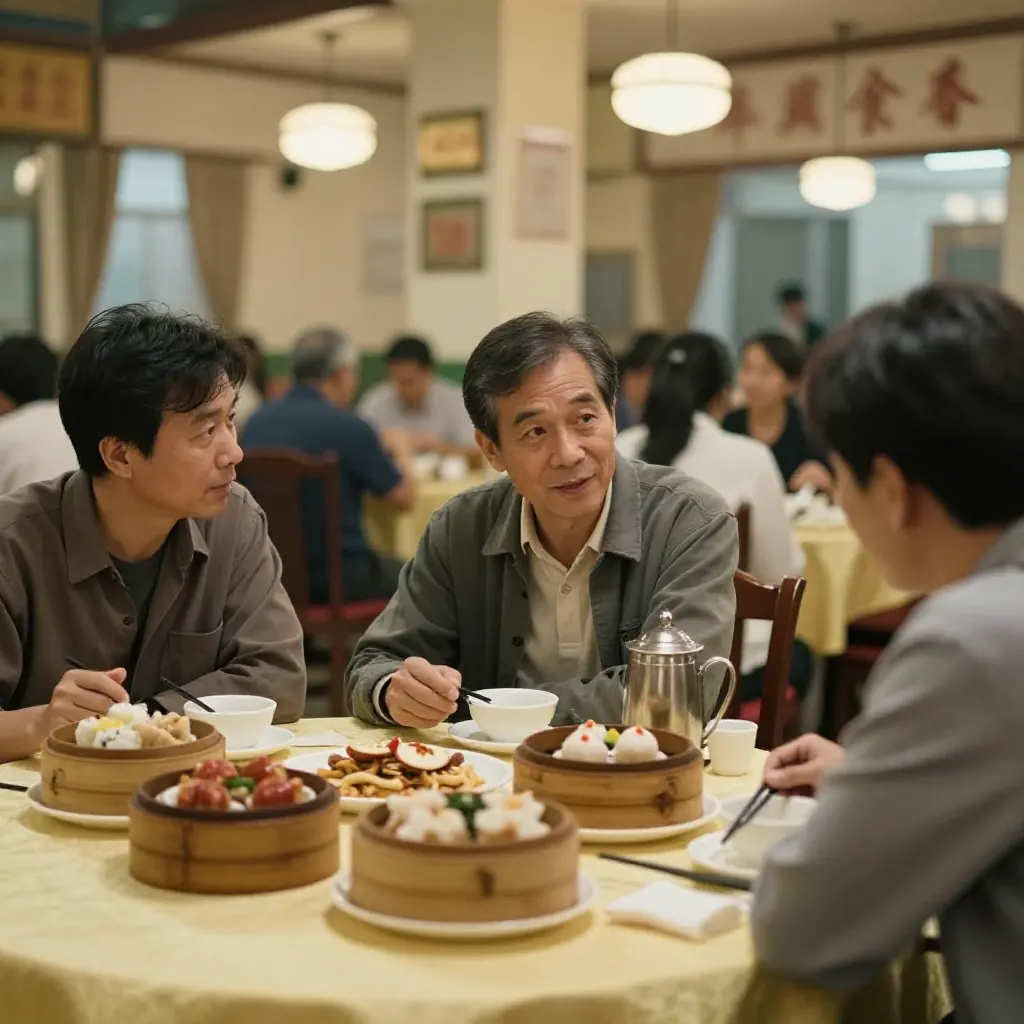
圖片由 AI輔助創作(Z-Image-Turbo)
4. 點解材料要由香港供應
呢一條,我最初以為只係物流問題。後來我發現唔係。
2026 年 7 月,香港商品出口按年升咗 50.7%,人工智能相關電子產品再度錄得可觀增幅,1 至 7 月整體貨物出口貨值按年升 40.9%。呢件事我當時寫過一篇筆記(《香港出口暴漲 50.7%,我哋呢一代外貿人點跟》),我當時嘅讀法係:香港呢條鏈換咗引擎,但引擎依然係香港。
而家我睇手機殼呢門生意,我睇到多一層。
香港唔係一個生產地。香港嘅租金、人工,做唔到生產。但香港有樣嘢,係深圳、廣州、曼谷、拉各斯都做唔到嘅:
香港係一個信用中介。
咩意思?
假設我喺肯亞開一間工作室,要買一批頭層皮革。皮革可能嚟自意大利,可能嚟自越南。如果肯亞工作室直接同意大利皮革商買,意大利人會問:你係邊個?你點證明你找得到數?你遲三個月找數我點追你?
但如果呢批貨經香港走:香港採購、香港驗貨、香港集運、香港嘅銀行信用證結算。意大利人見到嘅對手係一間香港公司,佢識做呢種交易,佢識睇提單,佢識開信用證。
香港賣嘅唔係貨,係「我保證呢筆交易會完成」。
我做外貿嘅年代,三大件係信用證、提單、發票。呢三樣嘢嘅英文簡寫,我到今日都仲係隨口講得出。而香港喺呢三樣嘢上面嘅專業密度,2026 年依然係全世界頂級。
所以「材料由香港供應」呢句,唔係為咗慳運費,係為咗把信任標準化。一個肯亞嘅小工作室,唔可能自己建立一套國際信用體系。但佢可以接駁落香港已經有嘅體系度。
具體係咩材料?我心裡面嘅清單係:意大利同越南嘅頭層皮革、東南亞嘅天然橡膠同藤、非洲嘅硬木、內地嘅再生纖維同竹。呢批材料有一個共通點——佢哋冇一個標準價。同一批皮,睇你點分級、點裁、點避開瑕疵位,出貨率可以差兩三成。呢種生意最需要嘅唔係便宜嘅採購,係一個識睇貨嘅中間人。而我做咗 26 年嘅,就係呢種「識睇貨」。
所以香港喺呢個模式裡面做嘅係四件事:採購、驗貨、集運、結算。四件事都唔需要廠房,只需要信用同專業。而呢兩樣嘢,係香港 2026 年仲有、而且短期內唔會被取代嘅。
呢個亦係我睇到嘅香港 2026 年嘅位置:唔係工廠,係開證行。
5. 喺非洲同東南亞教手藝
呢一段我要講得好小心。
因為好容易會講成兩種嘢:一種係慈善,一種係 ESG 營銷。兩種我都唔想。
我想講嘅係一件好實際嘅事:你要喺一個地方做三十年生意,你就必須令嗰個地方有一批人因為你而變得有能力。
唔係因為你偉大。係因為如果你冇,你三十年之後仲係一個外人,你嘅成本永遠比本地人貴,你嘅人永遠請唔到,你嘅貨永遠要飛嚟飛去。
我 2011 年寫過一篇《我的朋友 Fank》。Fank 係烏干達人,2008、2009 年廣州外貿最熱鬧嘅時候嚟搵工。佢唔啱做外貿——佢太老實,唔識壓價,唔識講大話。但佢係一個好老師。後來佢做咗廣州大學教授,一家人安居樂業。
呢件事教咗我一件事:有啲人唔係你嘅生意夥伴,但佢係你嘅地方根基。
所以「師傅教學徒、手傳手」呢件事,我睇嘅係:
- 對當地嘅人:學到一門手藝,係一個唔會被人搶走嘅資產。
- 對我嘅生意:我有一批識做、肯做、信得過嘅人。
- 對個品牌:每一個工作室嘅手藝人,都係故事嘅一部分,而且係真嘅。
呢三樣嘢嘅方向剛好一致。我唔會話我係為咗幫人——我係為咗做生意。但做生意同幫人喺呢件事上面,剛好指向同一個方向。咁我就唔需要揀。
四、最難唔係做生意,係選人
我成日同人講,做生意唔難。
呢句說話好多人聽完會覺得我囂。但係我講嘅係真心。產品、模具、供應鏈、報關、信用證、匯率——呢啲嘢我會。學識佢哋要十年,但你學識咗之後,佢哋唔會再變。呢啲全部係可以學嘅嘢。
選人唔同。選人係一樣學唔完嘅嘢,而且係一樣你答錯就要還嘅嘢。
我做外貿 26 年,真正剩落嚟嘅資產係咩
我 1998 年入行。由廣州一間外貿公司做起,做到今日。
呢 26 年,我做過嘅客人橫跨歐洲、中東、非洲、東南亞、南美。有啲客人合作咗十幾年。有啲客人,我連佢個仔幾時結婚都知道。2009 年德國 KTL 嘅 Frank,佢派人嚟我哋廣州公司駐廠兩三個月,就為咗一個四頻老人機項目。2026 年中秋前夕,佢個仔 Lukas 接手公司之後,問我哋訂 100 盒月餅。Frank 今年 72 歲。
呢啲關係係咩?
好多人以為係「人脈」,係「資源」,係我可以用嚟打開市場嘅鑰匙。呢個講法冇錯,但唔夠準確。
準確嘅講法係:我知邊個人,喺冇合同擺喺面前嘅時候,係老實嘅。
呢句話聽落好簡單,但佢係我做生意 26 年,最貴嘅一樣收穫。
因為「冇合同擺喺面前」呢個狀態,係做生意最危險、亦係最真實嘅狀態。合同簽咗之後,人人都老實——唔老實要賠錢。但喺簽之前呢?喺一個口頭承諾、一個微信語音、一句「得,我幫你搞」嘅時候,你點知對面嗰個人會唔會認數?
我做過一單。2000 年代初,廣州小北,一個非洲女客嘅手機喺酒店被人偷咗。理論上唔關我事——貨交咗,單簽咗。但我賠咗。當時好多人話我蠢。後來,佢屋企人做咗非洲一個國家嘅總統親屬。呢個故事我寫過。但我今日想講嘅唔係「好人有好報」,我想講嘅係:當時我賠嘅原因,唔係因為我算得出回報,係因為我判斷嗰個人值得。
呢種判斷,26 年做落嚟,我手上有十幾個國家嘅樣本。
所以我當我講「一個國家一個工作室」,好多人以為我講嘅係一個供應鏈計劃。其實我講嘅係一份候選人名單。我唔需要由零開始喺曼谷或者奈洛比搵人。我打開電話簿,我已經知道邊幾個客人值得我買張機票過去坐低傾。
呢個計劃唔係一個空想。佢已經有咗一個具體嘅落腳點:HANDSOME——我投資嘅訂造奢侈品品牌,而家做緊海外獨立站。而我嘅角色,唔係嗰個落場做貨嘅人。我係嗰個認得人、出得起信用、出事之後仲喺度嘅人。
呢個先係我真正嘅資產。唔係個品牌,唔係個產品,係一份名單。
我點判斷一個人?
我唔識用心理測驗,唔識睇簡歷,唔識做背景調查。我用嘅方法好土,但用咗 26 年。
第一,睇佢喺一張細單上面嘅表現。
呢個係我最信嘅一招。一張五千美金嘅單,冇人會為咗佢出賣自己嘅名聲。所以喺細單上面,一個人嘅真面目會露晒出嚟。佢會唔會為咗多賺兩百蚊而換一批差嘅料?佢會唔會遲三日交貨但唔講?佢會唔會明明做唔到但照樣應承?
一個人喺細單上面嘅選擇,就係佢喺大單上面嘅選擇——只不過細單上面嘅後果細,所以佢唔需要遮掩。
第二,睇佢會唔會主動講壞消息。
呢個係我最重視嘅一個信號,重到我可以為咗佢放棄一單生意。
做生意,好消息人人都肯講。壞消息先係分水嶺。一個人發現問題之後,第一時間打俾你講「鄭哥,出咗事,我搞成咁」,同另一個人收埋三個禮拜、等你追問先肯講——呢兩個係兩種人,兩間公司,兩個結局。
我做外貿咁多年,見過嘅爆煲,九成都唔係因為問題本身,係因為問題被收埋。問題本身通常有得救。收埋咗三個禮拜嘅問題,冇得救。
所以而家我請人,我唔係睇佢有幾叻。我係睇佢第一次做錯事之後,幾快同我講。
第三,睇佢找數嘅時間。
呢條聽落好似好現實,但佢係最誠實嘅一條。
付錢嘅時間唔係關於錢。係關於佢將你放喺佢名單嘅第幾位。同一個客人,對大供應商永遠準時,對細供應商永遠拖三個月——你就知佢點睇人。佢今日點對一個比佢細嘅供應商,將來就會點對我。
我做過供應商,亦做過客人。兩邊都做過,我先明白:找數準時嘅人,唔係因為佢有錢,係因為佢當你係一件事。
呢三招聽落好簡單,甚至好土。但我告訴你,我用咗 26 年,夠用。因為呢三招唔係測能力,係測本性。能力可以學,本性唔可以。
年輕人負責,我做後台
呢個係我嘅計劃裡面,我最有信心、亦最少講出口嘅一部分。
我今年五十幾歲。時代變咗。我唔會再去非洲住三年,唔會再去曼谷跑供應商,唔會再學 TikTok 點玩。所以我嘅角色唔係操作者。
操作係年輕人去做的。每一個工作室,有一個年輕人喺現場:佢搵地方、請人、跑單、同當地客傾、處理出貨同售後。佢係老闆。
我嘅角色係喺後面:出資金、出第一批材料、出判斷、出人情網絡、出一個「出事之後我仲喺度」嘅承諾。
呢個「後台」兩個字,我要講清楚。佢唔係「老闆」,亦唔係「投資者」。佢係一種更古老嘅角色——擔保人。
我欠年輕人嘅係咩?我想過好多次。唔係一份薪水。係四樣:
- 一個唔會中途消失嘅後台。出事嘅時候,佢唔需要一個人扛。
- 一條唔會斷嘅材料線。佢唔需要自己搞定意大利皮革同信用證,呢啲我搞。
- 一個講得清嘅分賬方式。唔好等到賺錢嘅時候先傾,因為嗰時一定傾唔攏。
- 一個退場嘅方法。佢想走嘅時候,可以走得乾乾淨淨,唔需要同我反面。
第四樣最多人唔講,但我覺得最重要。因為如果一個人知道自己走唔到,佢就唔會全力做。綁住嘅人做唔出好嘢——呢句我喺前面講過,喺呢度一樣成立。
而我喺呢個結構裡面,賺嘅唔係人工,係一個我用 26 年建立嘅判斷力,終於有地方用。呢件事,係我今日唯一真正有興趣做嘅事情。
我最怕嘅一件事
上面講嘅全部係好嘅一面。我而家講壞嘅一面,因為呢一面我諗得最多。
選錯人,你會失去兩樣嘢。
第一樣係錢。呢個我習慣。我做生意 26 年,蚀過嘅錢唔少。錢冇咗可以再搵。
第二樣係友誼。呢個我唔習慣。
呢個係呢個模式最陰險嘅一點:我嘅候選人,正好係我嘅朋友。
我嘅名單上面嗰十幾個人,全部係同我合作咗十年以上、我信得過嘅客人。我請佢哋或者佢哋嘅下一代去開一間工作室,係一個好自然嘅動作。
但如果佢做唔起呢?如果我畀佢嘅錢,佢真係做唔起呢?
嗰個時候,我唔可以追佢。因為我當初講嘅係「投資」,唔係「貸款」。我亦唔可以當冇事發生。因為我內心有一條數。
最壞嘅情況唔係我蝕錢。最壞嘅情況係——以後我哋見面,唔再係朋友,係一單未清嘅生意。
我做外貿咁多年,見過好多呢種場面。兩家人食飯,客客氣氣,講天氣,講仔女,但餐枱上面有一單數,所有人都知,所有人都唔提。食完之後各自返屋企,以後少約。
呢個係我最怕嘅。而佢唔係一個「風險管理」問題,唔可以用合約解決。因為如果你要用合約解決,你一開始就唔應該搵朋友。
我暫時唯一想到嘅應對,係一條好唔討好嘅規矩:借出去嘅錢,一開始就當係送咗出去。如果佢還,我開心;如果佢唔還,我唔會失去一個朋友,因為我從來冇當佢係債仔。
呢條規矩嘅代價係:我一開始就要控制規模。我唔可以「投資」一間工作室嘅全部。我要佢自己都押身家入去——唔係因為我想佢受苦,係因為一個冇押身家嘅人,唔會盡力。
呢個結構好難拿捏。我而家仲未拿捏到。
五、各國係點做呢種生意嘅?我特登去研究咗
我唔想憑感覺做決定。所以呢幾個禮拜,我特登去研究咗幾個地方:佢哋點樣做「手工」呢種生意,佢哋有咩做得好,有咩代價,同埋我有咩可以偷。
我睇咗五個:意大利、法國、德國、日本、韓國,再加中國自己。以下係我睇到嘅嘢。有啲數字係官方或者行業報告口徑,有啲係媒體口徑,我會盡量標清楚。
意大利:一個鎮做一樣嘢
意大利有個概念叫「distretti industriali」——產業區。一個鎮做一樣嘢,做到全世界都要嚟買。
最出名嘅例子係眼鏡。Belluno 同 Cadore 呢一帶,有 814 間眼鏡相關企業、19,000 個從業員(2024 年口徑),據意大利官方資料,呢個區生產咗全國大約 70% 嘅眼鏡。2025 年上半年,意大利眼鏡出口 28 億歐元,雖然比 2024 年嘅高位跌咗 3.7%;大約 90% 嘅產量係出口。意大利係歐洲第一大鏡框同太陽眼鏡生產國,亦係全球高級奢侈品段位嘅第一生產及出口國。呢個區嘅歷史由 1878 年 Calalzo di Cadore 開始。
呢個模式做得最好嘅地方係:成條鏈都喺同一個鎮裡面。大集團同中小企業同時存在,做模具嘅、做五金件嘅、做表面處理嘅,全部係專門戶,每個人只做一小段,但每一段都做到極致。你做眼鏡唔需要自己搞電鍍,你行兩條街就有人幫你搞,而且佢哋做咗三代。
代價呢?
第一,佢哋太高集中。一個鎮做一樣嘢,即係全球需求一跌,成個鎮一齊跌。我睇到嘅數字就係咁:2025 年上半年出口跌 3.7%,太陽眼鏡段跌 5.5%,而歐洲市場升 8%、中國升 29.5%、墨西哥升 47%——你要靠分散市場去頂住單一區域嘅波動。
第二,佢哋出名,但唔一定賺錢。一個眼鏡區賣出去嘅係「Made in Italy」呢個標籤,而呢個標籤嘅最大受益人,通常係品牌方,唔係做加工嘅中小企業。
我要偷嘅係:唔係「開一間大廠」,係「一個地方,一群互相供應嘅專門戶」。一個工作室唔應該自己做晒所有工序,佢應該開喺一班相關手藝人中間。
法國:學徒要行五年路
法國有個組織叫 Compagnons du Devoir,1941 年成立。佢嘅制度我覺得係全世界最接近我講「師傅教學徒、手傳手」嘅現成版本。
具體係點?學徒 15 到 25 歲入行,大概 30 個行業可以揀——建築(砌磚、木工、石雕)、軟材料(皮革、製鞋、傢俬)、工業(鍋爐、機械)、味道嘅行業(麵包、糕點、芝士),連製桶都有。
然後係最關鍵嘅一步:Tour de France,環法之旅。一個年輕人考到第一個文憑之後,就要開始去唔同城市嘅師傅度做,平均做足 五年,每年要換一個城市,而且規定一定要有一段去外國——非法語國家,覆蓋 65 個國家。佢哋而家喺法國有大约 90 間「Maison」(驛站),每年培訓接近 15,000 人。
呢個制度最聰明嘅地方係:佢唔係教你技術,佢係逼你換環境。你今年喺呢個師傅度學到嘅做法,下年喺另一個城市可能係錯嘅。五年之後,你唔會只識一種做法,你識嘅係「點解要咁做」。
代價?好明顯。慢,而且貴。一個人要花五年喺路上,唔係人人都捱得住。而且呢種制度要靠一個龐大嘅協會、贊助同政府支持先撐得起——2024 年法國對僱主嘅學徒補貼大約 6,000 歐元一個人,而削減補貼嘅討論已經開始。
我要偷嘅係:我唔可能搞五年環法。但我可以偷一個更細嘅版本——每一個工作室嘅師傅,必須去過最少一個其他地方嘅工作室做過至少三個月。呢個唔貴,但佢會令手藝嘅「標準」變成共享嘅,而唔係各自為政。
德國:師傅證唔係名譽,係門檻
德國嘅手工業(Handwerk)制度,係我睇完之後最佩服嘅一個。
路徑係咁:15 到 18 歲入「雙元制」(Dual System)——一星期幾日喺工坊做實務,其餘日子去職業學校讀書,做大概三年。考完「技工考試」(Gesellenprüfung),成為技工。要再上一層,就要做幾年技工累積經驗,然後去師傅學校(Meisterschule)讀一至兩年,再考「師傅考試」(Meisterprüfung)。
關鍵係:師傅證唔單止係一個名譽,佢係一個門檻。2020 年德國修改手工業條例,喺 12 個行業恢復咗「師傅義務」(Rückvermeisterung)——冇師傅證,唔可以開業、唔可以收學徒。現時有 53 個行業係咁。師傅同時係教育者、經營者同技術權威,三個身份綁喺一張證書上面。
呢個制度有幾大?2023 年 7 月到 2024 年 6 月,德國手工業有大约 260 萬個有資格嘅從業員,其中技工大约 230 萬、師傅大约 16.7 萬。同一時間,手工業有大约 10.7 萬個空缺請唔到人。呢十年(2013 至 2023/24)技工數目跌咗,但師傅數目反而升——因為制度改咗,加上企業肯出錢幫員工考師傅。
代價?慢,同官僚。你要做一個師傅,可能要用接近十年。而且「師傅義務」呢樣嘢一收緊,就會有人話你保護主義、阻人入行——2020 年嘅改例到今日都仲有人爭議。
我要偷嘅係一個好具體嘅念頭:我要嘅唔係最叻嘅師傅,係「識教人」嘅師傅。德國嘅制度告訴我,如果我唔把「教人」列為師傅嘅資格之一,啲師傅就唔會教——因為教識徒弟會分薄自己。所以我嘅想法係:一個工作室嘅師傅,收入應該同「帶出幾多個可以獨立做貨嘅徒弟」掛鈎。呢個係我睇完德國之後,唯一真正改變咗嘅設計。
日本:燕三條,靠設計翻身
日本新潟縣有個地方叫燕市(Tsubame),做金屬做咗 400 年。
佢有個數字我睇完印象好深:日本國內生產嘅湯匙同叉,超過 95% 係燕市做嘅。以前連社會科教科書都會介紹。而家唔止餐具——鍋、水壺、平底鍋、濾網、刀,甚至微波爐、冰箱、咖啡機,燕市都有做。全世界第一隻 IH 對應嘅商用鍋,就係 1985 年由燕市一間不鏽鋼加工廠開發出嚟。
但佢真正值得學嘅唔係「400 年」,係佢最近 30 年做嘅事。
燕三條面對嘅問題同所有老產地一樣:人工貴、訂單流去中國同東南亞、做代工越做越薄。佢嘅回應唔係降低價格,係換一個用法。佢哋由「大量餐具」轉去做「設計主導嘅生活用品」:用同樣嘅精密板金技術,做一個設計得靚嘅垃圾桶、做單片麵包嘅熱壓三明治機、做同咖啡界名人合作監修嘅咖啡機。佢哋連官方網站嘅標語都係「設計就係機能性」。
結果係「Made in Tsubame」變成一個品牌名詞,而唔只係一個產地。
代價?呢個轉型花咗幾十年,中間死咗好多廠。而且佢哋最終仍然要靠大企業嘅訂單——做家電品牌嘅供應商,同自己做品牌,係兩種命運。
我要偷嘅係:唔好同人家講「我做手機殼」。要講「我用一種做 X 嘅手藝,做一個隨身嘅嘢」。燕市嘅手艺係金屬加工,我嘅手艺可以係皮革、可以係編織、可以係木。同一雙手,可以做好多種產品——呢個係老產地唯一嘅活路。
韓國:化妝品 ODM,同我完全相反嘅路
呢個係我睇完之後最需要坐低嘅一個。
韓國化妝品能夠十年稱霸全球,背後唔係品牌嘅功勞,係代工。Cosmax(코스맥스)係全球最大嘅化妝品 ODM 之一:2024 年合併營收 2 萬 1,661 億韓圜(大约 21.66 兆韓圜以下嘅量級,按年升 21.9%),營業利益 1,754 億韓圜(升 51.6%),淨利 884 億韓圜(升 133.9%)。Cosmecca 亦係同一條路。
佢哋做嘅係咩?一條讓小品牌「即開即用」嘅後台。你想出一個護膚品牌,你唔需要開廠,你唔需要請化學家,你唔需要搞定法規。你帶一個想法同一個包裝設計去搵 Cosmax,佢由配方、打樣、測試、法規文件、灌裝、包裝全部幫你做完。你要一千件都可以。
呢個模式有幾強?韓國嘅 indie 品牌——你聽過嘅好多名字——就係靠呢個後台,喺一兩年之內由零做到出貨全球。Cosmax 自己嘅增長就係由呢批小客帶動,而佢哋嘅東南亞法人(印尼、泰國)增長仲快過韓國本部。
呢個正正係我計劃嘅相反。
我係「一個國家一個工作室」——貴、慢、分散、每間都要人。
佢係「一個後台,服務一千個品牌」——便宜、快、集中、可以規模化。
我認真問過自己:我係唔係做錯決定?
韓國模式嘅代價都有,而且唔細:品牌永遠學唔識做產品,代工廠永遠唔會接觸到消費者,而「後台」本身唔會變成品牌。而且當所有品牌都用同一個後台,佢哋嘅產品會愈來愈相似——呢個係韓國 indie 品牌今日面對嘅真問題。但呢啲代價,唔改變佢賺錢嘅事實。
所以我唔會話韓國模式唔好。我只會話:佢做嘅係另一門生意。
中國:我最有資格講嘅一段
最後講自己。我係廣東人,我做外貿 26 年,我睇住呢條路行過。
中國代工嘅起點係 1978 年「三來一補」。1981 年,加工貿易只佔中國進出口總額 6%;1998 年升到 53.4%;2008 年加工貿易額突破 1.05 萬億美元。
呢三十年中國工廠學到啲咩?我講一個細節。有間紹興家紡企業嘅負責人講,佢哋接品牌客戶嘅代工單,規範細到去「一根針、一截線頭」:角色嘅造型、眼神、縫線嘅針距、污點——每一項都有規定。「普通單可以放過嘅瑕疵,喺呢條線上面就要挑返出嚟返工;裁剪剩落嘅邊角料,一日堆成一座山。」
呢個就係代工真正教識中國工廠嘅嘢:驗廠標準、工藝流程、交付規範。唔係技術,係紀律。喺反覆打樣同返工入面,啲廠學會咗控制色差、損耗同良品率。
代價係咩?四個字:有品無牌。
義烏一間杯壺企業嘅創辦人吳獻民講得最直白:「工廠有生產權,卻沒有售賣權。」佢 2016 年喺深圳開過五間輪胎店,門頭上清楚寫住「華新」。但顧客一入門只會問:有冇馬牌?有冇米芝蓮?冇人記得佢間鋪叫咩名。
而家浙江嘅產業帶點做?兩條路。
第一條:借 IP。同一個廠出嘅風扇,無標賣十幾蚊,貼上知名卡通 IP 之後標價可以超過 40 蚊。正版迪士尼授權嘅冷飲杯,終端價比普通貨翻兩三倍。呢個市場有幾大?中國玩具和嬰童用品協會嘅行業報告話,2025 年中國年度授權商品零售額達到 1,798.5 億元,按年升 15.9%;年度授權金 68.3 億元,升 12.3%。
但借嚟嘅名,始終唔係自己嘅。授權到期,故事同流量一齊走。消費者記住咗個 IP,未必記得住工廠。
第二條:用真金白銀砸自己嘅名。浙江一間杯壺企業由 2023 年開始打造自有品牌 IP「燙嘴哥」:先改包裝同產品標識,再改經銷商門店,把形象放上貨架同門頭,然後投高鐵同機場廣告。佢上一年度品牌推廣投入大约 3,000 萬元,其中「燙嘴哥」同一間外部顧問公司合作開發,合作期 3 年起,一年費用超過 600 萬元。
呢個就係定價權嘅價錢。代工嘅時候,你算鋼材、人工、機器折舊。做自己品牌嘅時候,設計費、授權費、包裝、內容、廣告、售後、庫存全部要入賬。原本由品牌商承擔嘅市場風險,向前移到工廠身上。
仲有第三樣,係我睇到嘅時候最興奮嘅一樣:共享工廠。
東莞松山湖 XbotPark 機械人基地有個共享工廠。佢唔係租設備,佢係做供應鏈管理。公開資料(2025 年 5 月)顯示,佢已對接超過 100 個企業或團隊,合作供應鏈服務商超過 100 家,幫初創企業出貨 30 萬件。佢嘅總經理講嘅一句說話,我覺得好精準:「我們不是租賃設備的共享空間,而是提供供應鏈管理、生產流程優化、技術迭代支持的『製造大腦』。」
具體做法係:通用嘅零件——注塑模具、鏡頭、傳感器、摩打、電池——先建好一個資源池。大概 70% 到 80% 嘅供應鏈開發工作提前做完,剩落嘅 20% 到 30% 才需要為項目單獨開發。而且佢做多一件事:把幾間小公司嘅同類需求集中起嚟,用「團購」方式同供應商議價——有媒體叫呢種做法「工業拼多多」。
我睇到呢度嘅時候,心裡面同時出現兩個想法。
第一個想法:呢個才係我應該做嘅事——唔係做產品,係做一個令好多小生產者活得落去嘅後台。
第二個想法:我做嘅版本,係要把呢個後台搬去十幾個國家。而佢哋只做一個東莞。
中國嘅產業帶做得最好嘅係三樣:速度、密度、成本。深圳東莞周邊,你要開一個新模,行兩條街就有人做;你要改個結構,第二日就有樣板。呢個密度全世界最強,冇一個國家追得上。做得唔夠好嘅係兩樣:品牌同定價權。
我把呢個功課做完之後,寫低一句:手藝唔可以量產,但係信用可以。
六個模型擺埋一齊睇
我睇咗六個地方,得出一張表:
| 模型Model | 做得最好嘅Best at | 代價Cost | 我要偷嘅What I steal |
|---|---|---|---|
| 意大利 產業區Italy, distretti | 一個地方一群專門戶,互相供應One place, many specialists | 太高集中,一跌齊跌Over-concentration | 工作室要開喺手藝人中間Site studios among craftsmen |
| 法國 CompagnonsFrance, Compagnons | 換城市、換師傅,五年環法Five-year travelling apprenticeship | 慢、貴、要機構撐Slow, costly, needs an institution | 師傅必須去外地做過三個月Three months abroad for every master |
| 德國 MeisterGermany, Meister | 師傅證=開業+收徒嘅門檻Master cert as a licence to operate | 近十年才出一個師傅Nearly ten years per master | 師傅收入同帶出徒弟數掛鈎Pay masters for apprentices graduated |
| 日本 燕三條Japan, Tsubame-Sanjo | 用手藝+設計,重賣同一雙手Same hands, redesigned products | 幾十年,死好多廠Decades, many closures | 唔講「做殼」,講「用手藝做隨身之物」Sell the craft, not the case |
| 韓國 ODMKorea, cosmetics ODM | 一個後台,令小品牌即開即用One back end, many fast brands | 後台唔會變品牌,產品趨同No brand, converging products | 「入行門檻」這件事可以標準化Standardise the entry barrier |
| 中國 產業帶/共享工廠China, clusters & shared factories | 速度、密度、成本Speed, density, cost | 有品無牌,市場風險前移No name, risk pushed upstream | 通用嘅先做好,剩低嘅才客製Pre-build the common 80% |
睇完呢張表,我有兩個結論。
第一:呢六個模型裡面,有五個都暗示我唔應該一次開十幾間工作室。意大利同日本係例外,但佢哋嘅代價係幾十年,甚至上百年。
第二:我嘅「一個國家一個工作室」,其實係意大利模式加法國模式,再減去佢哋嘅制度支撐。而呢個減法,就係風險所在。
一個我唔想答嘅問題
講到尾,我要問自己一條問題。
把六個模型擺埋一齊,「一個國家一個工作室」對比韓國 ODM 模式,係唔係真嘅有優勢?
我認真試過答。
速度:韓國贏,贏好多。一個新品牌由概念到出貨,可能三個月。我要三個月,可能連一個工作室嘅租約都未簽完。
成本:韓國贏。佢一個後台服務一千個品牌,邊際成本近乎零。我每開一個工作室,成本要重新計一次。
風險:韓國贏。品牌賣唔出係品牌嘅事,後台照收錢。我就要自己食。
規模:韓國贏。
唯一我贏嘅係一樣:如果我做得到,我嘅品牌係冇人複製得到嘅。因為佢嘅基礎唔係產能,係信任——而信任係一樣要時間、要人、要關係嘅嘢。呢個係一個冇得用錢加速嘅變數。
所以老實講:我揀嘅唔係最容易嗰條路。
我揀佢,可能有一半係因為商業邏輯——我相信信任成本可以變成護城河。但我要承認,另外一半可能係因為我唔想做後台。我做咗 26 年後台,我幫好多人出過貨,佢哋個名喺箱上面,我個名喺報關紙上面。我唔想再做呢個角色。
呢個唔係一個理性嘅理由。但佢係一個真實嘅理由。而我覺得,一個 50 幾歲嘅人做決定,承認自己有呢種理由,比假裝自己純粹係理性,會好啲。
六、冇人肯講嘅一件事:呢個唔似奢侈品
上面嘅研究我做完之後,我知道自己要走邊條路。但我跟住要面對一樣更難嘅嘢——唔係市場,唔係對手,係我自己。
呢個計劃唔係一個空想。佢已經有一個具體嘅落腳點:HANDSOME——我係呢個品牌嘅投資人,佢而家做緊海外獨立站。官方講法係「訂造奢侈品」——bespoke luxury。
但我打開自己個站睇一睇,睇到嘅數字係咁:
- 芳綸纖維系列:$39 到 $50。0.7mm、12 克、MagSafe。
- 皮革系列:$29 到 $39。頭層皮革包覆吸震內框。
- 防摔系列:$15 到 $29。鏡頭同屏幕加高、氣囊護角。
- 滿 $60 免運。
而站上面寫嘅話係:
「我們寫明真實材質與厚度,不用『軍工級』這類含糊說法。」
「本站每一個說法都是你能用卡尺和電子磅量出來的數字。」
「芳綸很薄,但不是防彈。皮革會留下痕跡,不會一直像新的。我們照實講。」
「15–50 美元,材質成本的差異直接反映在價格上。」
我讀返自己呢幾句話,然後讀返「訂造奢侈品」呢四個字。我坐咗好耐。
因為呢兩樣嘢,係互相矛盾嘅。
奢侈品唔係咁樣講嘢嘅。
奢侈品嘅規則係:價錢要貴到大部分人買唔起,產量要少到大部分人買唔到,故事要講到大部分人聽唔明。「我哋講清限制」呢種話,係一間誠實嘅公司講嘅,唔係一個奢侈品牌講嘅。奢侈品從來唔會主動提自己嘅缺點——佢提嘅係傳承、係工藝、係「你擁有嘅唔係一件產品,係一個位置」。
我可以繼續講「我哋只做三種材質」、「我哋報實際厚度」、「我哋講清限制」。呢啲全部都係真嘅,而且我相信佢哋係好嘅。但係,一個賣 $15 到 $50 嘅品牌叫自己做奢侈品,呢句話本身係唔成立嘅。
所以我有兩條路,而且兩條都要付代價。
第一條路:把價錢推上去。
由 $50 推到 $200、$300,甚至更高。呢條路做得到嘅條件係我前面講嘅全部:手工、一個師傅做三日、有名有姓嘅手藝人、可以查得到嘅材料來源、一個唔係人人都買得到嘅故事。上面 PITAKA 靠材料敘事做到 $49.99 到 $79.99,Mous 靠工程證明做到 £44.99 到 £64.99,CASETiFY 靠聯名做到 ¥1,000 以上。呢啲係先例,證明推到上去係有可能。
但代價係咩?代價係我要放棄現時最有價值嘅一樣嘢——坦白。因為你一旦推到 $300,你跟住要做嘅事,係令客人覺得值 $300。而你會慢慢發現,令客人覺得值 $300 最快嘅方法,係少講缺點。
呢個唔係我想走嘅路。但我唔敢講我一定唔會走。
第二條路:把「奢侈品」呢個字放低。
繼續賣 $15 到 $50,繼續講清楚限制,做一間誠實嘅好公司。呢條路嘅好處係我唔需要講大話,我唔需要學奢牌嘅語氣,我唔需要請一個 PR 幫我寫「傳承」兩個字。
但代價係:呢門生意嘅天花板,就係「一間誠實嘅好公司」。上面嗰條數我仲記得——行業平均毛利跌穿 15%,68% 共用公模。$15 到 $50 呢個價位帶,如果冇一個可以支撐溢價嘅故事,最終會跌返落去拼價,然後死喺拼價。
所以我而家嘅處境係:我要麼放棄「奢侈品」呢個字,要麼放棄「坦白」呢種語氣。而呢兩樣嘢,一樣係我嘅野心,一樣係我嘅性格。
我暫時嘅想法係一個好唔舒服嘅答案:
我唔覺得「奢侈品」係一個可以自己宣布嘅身份。你唔可以宣布自己係奢侈品;你只可以做到某一日,客人自己覺得你係。而喺嗰一日之前,我唯一可以做嘅事,係繼續講真話,同時繼續把材料、工藝、手工嘅比例提高——直到價錢係因為成本同手藝而升,唔係因為我想賣貴而升。
呢個過程可能好慢。可能慢到永遠追唔上呢個字。
所以我老實答呢條問題:我而家仲未知道呢門生意係一門奢侈品生意,定係一門誠實嘅好生意。我知嘅係,我唔願意為咗「奢侈品」呢個名,去學講一啲我自己都唔信嘅話。
如果最後嘅答案係「誠實嘅好生意」,我接受。但我會繼續試——用真嘅手藝去撞一次呢個字嘅門。撞唔開,我唔會怪人,我會繼續做我識做嘅嘢。
七、風險:我唔會賣呢個夢
上面講嘅嘢,如果由一個做 marketing 嘅人講,會講成一個好靚嘅故事。但我 26 年嘅經驗教我:一個唔肯講風險嘅計劃,通常都係一個未想清楚嘅計劃。
我睇到四個真實風險。第一個我已經喺上面講咗(選人)。以下係另外三個,我會講邊個最令我失眠。
呢一點係我最唔浪漫嘅一點,但可能係最實際嘅一點。
做品牌嘅問題係:回本慢。你今日開始做一個品牌,可能要三年之後先有人識。呢三年你食咩?
所以我想同時做 OEM/ODM。用工作室嘅產能、師傅嘅手藝,去接其他人嘅單——設計師品牌、買手店、獨立品牌。呢部分單價冇自己品牌高,但現金流快、風險低。
呢個做法有先例。上面講嘅所有 DTC 品牌,供應鏈都集中喺深圳、東莞。佢哋唔自己開廠,佢哋搵代工。喺呢條鏈上,代工嘅人係賺得最薄嘅。但如果代工嘅人同時有自己的品牌呢?
我唔知答案。但呢個係一個好過「純代工」或者「純品牌」嘅結構。至少佢令我唔需要喺第一年就靠品牌嘅收入生存。
風險一:管理半徑
一個國家一個工作室。聽落好聽。但十個國家就係十個稅務體系、十套勞工法、十種語言、十個時區、十種「你唔明嘅潛規則」。
我做過最大嘅團隊,係喺廣州一間外貿公司,管二十幾個人。我知道管人係咩一回事:你以為你管嘅係工作,其實你管嘅係人心。
而且呢個模式有一個好陰險嘅特性:佢唔會一次死,佢會慢慢死。一間工作室出問題,你仲撐得住。三間同時出問題,你就會開始拆東牆補西牆。五間,你就會開始講大話。八間,你自己都唔知邊間係真賺錢。
老實講,我而家冇答案。我唯一想到嘅係:唔好一次開十間。一間做通,再做第二間。呢個同手工嘅邏輯一樣——唔好一次做十萬個,做通一個,再做下一個。
風險二:手工點做到品質一致
呢個係我認為最難嘅一條,而且係冇得繞嘅一條。
工業化嘅本質係咩?係消除差異。同一個模具,同一台機,同一批料,出一萬個一樣嘅殼。品質一致係佢嘅副產品。
手工嘅本質係咩?係保留差異。同一個師傅,同一個款式,做十個,十個都唔同。呢個係手工嘅價值,但同時係手工嘅災難。
因為客人嘅容忍度係有分別嘅。買藝術品嘅客人,接受每個都唔同。買手機殼嘅客人,唔接受。你話「呢個係手工嘅特色」,佢會話「咁你第二個同我睇下」。
我睇過 PITAKA 嘅數據:官網 PDP 標明 「2 months warranty」——對一個 $60 到 $80 嘅單價嚟講,兩個月保養係一個明顯嘅短板。而 BGR 嘅實測指出,佢 UltraGuard 系列嘅 Orca Resin 塗層「大量」收集指紋同油污。佢哋可以咁做,因為佢哋係賣材料敘事,客人買嘅係材料,唔係耐用。
但我如果賣手工,我就唔可以咁。因為手工嘅承諾本身就係「呢件嘢做得好」。做得好嘅反面就係「呢件嘢做得唔好」,而客人係分得出嘅。
我而家嘅想法係:把一致嘅部分交俾機器,把唔一致嘅部分交俾人。結構、尺寸、開孔呢啲位,機器做,一定要一致。表面、質感、配色、縫線呢啲位,人做,容許有差異。呢個可能係一條出路。但我未試過,我唔敢講一定得。
風險三:資金回收期
呢一條係我最擔心嘅。
我講嘅模式有三個現金流出水口:
- 幫當地工作室起步嘅資金。呢筆錢出去之後,唔知幾時返嚟。而且係「唔係貸款」,即係佢做唔起,你就真係冇咗。
- 材料採購。由香港供應,即係要墊資。皮革、木料、運輸、保險、信用證,全部要錢先,收錢後。
- 人才培訓。師傅教學徒,學徒頭半年係負資產——佢會做壞材料,會拖慢進度,會走。
三個出水口同時開,而入水口只有一個:賣貨。
而手工、接單先做、一次做一個——呢個模式嘅本質係慢。你要客人等,你就唔可以收佢訂金收得太狠(收得狠,佢就走)。但你唔收訂金,你就係用自己嘅錢幫客人做貨。
呢個係我做外貿 26 年,見過最多人死嘅一條:唔係冇訂單死,係有訂單但收唔到錢死。
1998 年到今日,我見過嘅每一間執笠嘅貿易公司,都唔係因為冇生意。係因為生意太旺,錢收唔返。
呢一條係最令我失眠嘅一條。管理半徑可以靠慢去解決,品質可以靠工序分工去解決,但資金回收期係結構性嘅——你越成功,你墊嘅錢越多。呢個係一個好反直覺嘅陷阱:生意越好,現金越緊張。
我而家嘅想法係:用 OEM/ODM 嘅快錢,養自己品牌嘅慢錢。呢個唔係一個優雅嘅答案,但係一個可以生存嘅答案。
八、鄭哥三句話
第一句:呢個行業 90% 嘅人拼價,然後死喺拼價度。1688 嗰條數字——68% 共用公模、平均毛利跌穿 15%——唔係一個統計,係一個墓誌銘。
如果你打算入呢行,第一件事唔係搵供應商,係決定你打唔打價格戰。打,你就係嗰 68%。唔打,你就要有一個客人查得到嘅故事。冇第三條路。
第二句:溢價唔係嚟自塊膠,係嚟自一個客人查得到嘅故事。CASETiFY 賣聯名同社群,Mous 賣工程證明,PITAKA 賣材料科學——三種都係「驗證得到」。而「手工」係第四種,佢嘅護城河唔係技術,係信任成本。
技術係可以買返嚟嘅。一個師傅三個月就教得出。信任買唔到。你喺一個地方要建立信任,要一年、兩年、五年。呢個係慢,但呢個係別人追唔到嘅慢。
第三句:一次做一個,唔係一個生產方式,係一個定價方式。我唔知我做唔做到量。但我知道,用一個唔需要拼價嘅價錢賣十二萬個,好過用一個穿底嘅價錢賣一千五百萬個。
呢句我寫嘅時候自己都猶疑。因為「好過」呢兩個字,我冇數據支持。我只有 26 年嘅手感。手感唔係證據,但手感係我做決定嘅依據。呢個我承認。
九、仲有咩我未想通
我唔會用一個 sales pitch 收尾。我冇嘢要賣。呢篇文章由頭到尾,都係我一個人喺度拆一門生意。
以下係我仲未想通嘅嘢。我照列。如果你識答,歡迎同我講。
一、兩條線會唔會互相踩。同一間工作室,日頭做自己品牌嘅單,夜晚做 OEM 嘅單。呢個聽落好合理。但品牌嘅本質係「稀缺」,OEM 嘅本質係「產能」。同一班人、同一個地方,做兩件相反嘅事,會唔會最後兩邊都做唔好?我見過唔少廠做自己品牌失敗,就係因為佢哋嘅 DNA 係代工——佢哋識做貨,唔識做品牌。我而家嘅結構,其實係同一個問題嘅另一個版本。
二、師傅會唔會走。我教識一個學徒,佢做三年,識晒,然後自己開一間。呢個係好事,定係壞事?如果佢留喺我嘅體系裡面,係我嘅人。如果佢自己開,係我嘅競爭者。但我又唔可以綁住佢——綁住嘅人做唔出好嘢。我暫時嘅想法係:如果佢哋走得,就代表我嘅體系唔夠好。但呢個講法好聽,未經測試。
三、香港嘅信用中介角色,可以維持幾耐。2026 年 7 月香港出口升 50.7%,我當時寫咗一篇文章講呢件事。但呢條數字背後,係 AI 電子產品撐起嘅。如果有一日 AI 電子嘅熱潮退,香港嘅信用中介角色會唔會跟住縮?我嘅工作室模式係建立喺香港嘅信用體系上面。呢個係一個地基問題,唔係一個裝修問題。
四、手工嘅價錢,市場肯唔肯俾。呢個係最基本嘅一條,亦係我最冇把握嘅一條。我做過嘅所有生意,價錢都係市場話事。我可以講一個好好嘅手工故事,但如果客人唔肯俾,我就係一個講故仔嘅人,唔係一個做生意嘅人。
五、我幾時知道應該停。我 26 年做過好多行。有啲做得成,有啲做得唔成。做得唔成嗰啲,事後睇都有一個共通點:我太遲先認。呢次我唔知我會唔會又太遲。呢個問題冇答案,只可以提醒自己。
講返旺角嗰個兩百幾蚊嘅手機殼。
我最後冇買。唔係因為貴。係因為我睇完一輪資料之後,我知嗰兩百幾蚊買嘅係一個故事,而嗰個故事我唔覺得值。
但如果有一日,有人做一個殼,材料係真嘅、手工係真嘅、師傅係有名有姓嘅、我可以查得到喺邊度做、做嗰個人係邊個——
我可能會買。
而且我可能會俾多過兩百幾蚊。
呢個就係我睇呢門生意,睇到最後嘅一句:貴唔緊要,講唔清楚先係問題。
#高端手機殼 #CASETiFY #Mous #PITAKA #外貿實戰 #溢價 #材料 #手工 #生意格局
Last week I stood outside a shop in Mong Kok, staring at a phone case priced a bit over two hundred Hong Kong dollars.
Not because the case was beautiful. Because I know how to make this thing.
I entered the trade in 1998. I've handled more products than I can count: electronic parts, transformers, plastic housings, radios, remote-control cars, Christmas lights, senior phones, watch phones, smart bands. Phone cases — I never did one big order on them. But I've done all their neighbours: the same mould shops, the same injection machines, the same Huaqiangbei stalls, the same containers to Europe.
So when I looked at that two-hundred-dollar case, the sentence in my head was: "This thing costs less than twenty bucks to make."
I'm not trying to expose anyone. In business, if a customer is willing to pay, that's your skill. What I wanted to understand was one thing: those two hundred dollars in the middle — what exactly did they buy?
I've been asking myself that for a few weeks, and I went through a pile of public research. What follows is what I found, and what I think about it. Some parts I still haven't figured out. I'll say so.

圖片由 AI輔助創作(Z-Image-Turbo)
1. Three Brands, Three Different Stories
To do this business, the first thing you have to work out is: at the top of the market, what are the highest-priced players actually selling?
I looked at the three most representative: CASETiFY, born in Hong Kong; Mous, from the UK; and Shenzhen's PITAKA. Three completely different price points, but one thing in common — none of them sells a case. They sell a story the customer can go and check.
CASETiFY: collaborations and community
It started in Hong Kong in 2011 as an app called Casetagram — "send us your photo, we print it" — at $35 a piece. The first spike came when British chef Jamie Oliver posted one. In 2014 it renamed itself CASETiFY and shifted from "customisation service" to "streetwear brand".
The numbers: about US$120 million revenue in 2021, three million units sold. By 2024, media reports put revenue at RMB 3.6 billion (that's a media figure, unaudited — I'll say that plainly). Its stated target for 2025 was US$3 billion, roughly RMB 21.5 billion.
Its own site claims: 30,000+ designs, 300,000+ SKUs, more than 100 licensed IPs. The price ladder looks like this:
| 層級Tier | 價錢Price |
|---|---|
| 入門(天貓最低)Entry (Tmall floor) | ¥179 |
| 常規主力Core range | ¥300–500 |
| 高端/材質款Premium / material | ¥500–729 |
| 聯名限量Limited collab | ¥1000+(DIESEL ¥4000+,蝙蝠俠 ¥10000+)¥1,000+ (DIESEL ¥4,000+, Batman ¥10,000+) |
| 二手炒作Resale | 村上隆「波漾」盲盒官方 ¥549 → 二手 ¥3000+Murakami blind box ¥549 official → ¥3,000+ resale |
What struck me wasn't the price. It was the cadence.
It doesn't bet on one hit. It uses the frequency of new releases to beat the odds. Disney, Pokémon, Marvel, One Piece, Coca-Cola, Chiikawa, DIESEL, Murakami — these aren't marketing events. They're a production scheduling tool. The IP calendar drives the release rhythm, instead of the brand waiting for demand.
Then there's the customiser (CASETiFY Studio): pick the shell type, colour, layout, add text, add a photo. That has two layers of value. One, the SKU the user generates needs no inventory. Two, it's one of a kind, so it can't be price-compared.
I'll come back to that point, because it's the core of my own thinking.
Mous: engineering proof
Mous, from the UK, founded 2014. Its first product was Musicase — an iPhone case with cord storage — which raised £12,000 on Kickstarter. Then it hit production-quality problems, and Apple killed the headphone jack, wiping out the whole selling point overnight. The team borrowed £150,000 and moved into a factory to rebuild.
In 2017, Limitless raised close to US$2.5 million from 51,000 backers on Indiegogo — the top phone-accessory project that year.
FY2026 (media figures, unaudited): revenue £36.5 million, about RMB 334 million, up 23% year on year; EBITDA £4.3 million, up 44% — its best year since founding.
But its real skill isn't the numbers. It's a public experiment that repeats every single year.
It developed its own cushioning material called AiroShock. The explanation given is that the material is full of microscopic air bubbles; on impact they compress and absorb and spread the energy. That reframes the industry default of "thicker equals tougher" as "different material equals tougher", which directly holds up its pricing.
Then it uses a series of extreme stunts to notarise that material: a 45-foot crane drop onto concrete, a throw off Waterloo Bridge, the founder throwing a brand-new iPhone outside an Apple Store on launch day in 2017, bungee jumps, helicopters, hot-air balloons, 1,200 feet, even "dropped from the edge of space". In 2026 even a suitcase got a 250-metre drop and got dragged behind a race car.
And the prices? Mostly on the UK site: the thinnest Super Thin is £44.99 for iPhone 18 Pro Max; the clear Clarity is £54.99; the flagship Limitless 6.0 in aramid fibre is £54.99 for iPhone 16 Pro, walnut is £64.99, and the US site lists aramid fibre for iPhone 18 Pro Max at $79.99. Bundles (Upgrade Kit / Complete Kit) run four tiers, £62.99 to £112.99.
Look at that — no IP premium at all. Only structure, material and function. Within one series, the material (fabric → walnut → aramid fibre) and the add-ons (camera shield, stand, card wallet) create a £10 to £60 spread. Very clean structure.
PITAKA: material science
Shenzhen's PITAKA was founded in late 2015 by Zheng Yanghui with a few designers and materials specialists; the parent is Shenzhen Lingyi Innovation Technology. The founder was previously a rock fan and partner in an indie label — no accessory-industry background. On the company's front desk are eight characters: "Rather be an outlier than follow the crowd."
The numbers: annual revenue over RMB 300 million (2025 reporting, relaying the brand's own figure), annual volume at or past one million units, cumulative users reported at 1.65 million and now 2 million+ on its own site, selling into 120-plus countries. 137 patents. 200+ inventions. Tens of millions of RMB in R&D each year.
The material it sells is aramid fibre — Kevlar. The official language is "aerospace-grade aramid fibre", "five times stronger than steel, one fifth the weight". The most powerful part of that isn't the spec. It's the analogy: aramid fibre is what fighter jets, armoured vehicles and body armour are made of. Using that material for a phone case is a story in itself.
Prices: core cases run $49.99 to $79.99 (roughly RMB 298–499 in China), five to ten times a normal case. Accessories are deliberately held at $20–60 — magnetic grip $19.99, magnetic card wallet $34.99, magnetic power bank $59.99, car mount $59.99. That pricing isn't there to make money on accessories. It's there to push "case + wallet + grip" into a $130+ basket.
But there's one number that made it, for me, the most interesting company of the three.
A third-party e-commerce intelligence tool, Grips Intelligence, estimated in August 2026 (a sampled estimate, not an official figure — I'll say that plainly): ipitaka.com saw roughly 1.2 million monthly sessions, about 25 times a typical consumer-electronics store (~48,100); average order value was a high $150–175; but monthly transactions were only 1,868 — a conversion rate of 0.0% to 0.5%. Its direct competitor Rokform converts at 2.5% to 3.0%. The same estimate put its 2025 direct-site GMV at about US$3.5 million, down more than 50% year on year.
How do I read that?
My reading: traffic isn't the problem — the ability to close is. The material narrative successfully pulled in 1.2 million people, and only about a thousand of them paid. Where did the other 1.19 million go? They looked, nodded, and bought elsewhere.
That means two things to me.
First, telling a story isn't the same as collecting money. The story brings people in; something else turns them into revenue — a sensible price, a simple decision, no hesitation, someone willing to wait. If I'm doing handmade work and asking customers to wait three weeks, I have to solve "why is it worth waiting" even harder, or my conversion will be worse than 0.5%.
Second, my own numbers will be far smaller. I won't expect 1.2 million monthly sessions. If I get a few thousand sessions a month at 2% conversion, I'd call that a healthy business. Those are two completely different objective functions — one chases scale, the other chases density. I want the second.
The cleverest thing it does is name its materials. Fusion Weaving, Mammoth Resin, PitaTap, Lumintex, Cadmyra, SlimBoard. All trademarked, all with their own explainer pages. After doing this research I wrote one line down: a named process can be told over and over; an unnamed spec can only be told once.
圖片由 AI輔助創作(Z-Image-Turbo)
What the three have in common
After reading all three, I picked up a pen and wrote one line:
A high-end phone case was never selling a case. CASETiFY sells collaborations and community, Mous sells engineering proof, PITAKA sells material science. The premium doesn't come from the plastic — it comes from a story the customer can check.
Those two words — "can check" — matter enormously.
If you say your case survives a drop, the customer can drop it once and see. If you say you use aramid fibre, they can go look up aramid fibre. If you say you collaborated with Murakami, they can go and verify it. All of that is verifiable. The plastic itself is not.
That's the first truth I found: the source of the premium is verifiability, not quality.
Put it more bluntly. Two cases might differ by two dollars in cost. One has a story and one doesn't, and the price difference can be two hundred. That remaining one hundred and ninety-eight dollars buys "I know what I bought, and I can prove what I bought."
But that story has a fragile spot, and I have to name it.
In April 2024, the UK Advertising Standards Authority ruled against a Mous TV ad. The ad showed 50 people throwing phones in Mous cases into the air. The ruling noted that apart from three paid actors, the participants were mostly Mous employees, friends and family, so it did not constitute an independent test; the phones weren't dismantled to check for internal damage; and the internal drop report the brand supplied was 26 drops from 120cm — nowhere near the heights shown in the ad. The ASA found the ad exaggerated and misled, breaching BCAP 3.1, 3.9 and 3.12, and barred it from being broadcast again in that form.
That's an expensive lesson for anyone building a brand: the bigger the story, the more it has to hold. If you claim 250 metres, someone has to believe you really threw it 250 metres. When it doesn't hold, everything you told before devalues at once.
2. Ninety Percent Compete on Price, and Die There
Those three are the top of the pyramid. Now let me talk about below.
How big is this industry? The global phone case market was about US$16.31 billion in 2025, about US$17.26 billion in 2026, growing at a 5.8% CAGR, projected to reach US$21.6 billion by 2030 (The Business Research Company). Asia-Pacific was the largest region in 2025. Another report (Bozhesi Consulting) puts 2028 at RMB 129 billion globally at a 4.36% CAGR — different methodology, so don't mix the two growth rates.
The pie is not small. So a lot of people rush in.
But in the same pile of public material there's one number that made me sit down:
Data from 1688 shows that among standardised goods like phone cases and cables, more than 68% of products share common moulds, and the industry's average gross margin has fallen below 15%.
Sixty-eight percent on shared moulds. Margins below fifteen percent.
I've done twenty-six years of foreign trade. I know what 15% gross margin means. It means that after freight, FX, returns, interest on payment terms and the customer squeezing you, what's left in your hand may be negative. It means you can't hire a good designer, because one designer's salary eats a whole shipment's profit. It means you can't use good material, because good material costs more and the customer won't pay extra.
And then the death loop: no money to do good work → compete on price only → even less money to do good work.
I've watched this loop happen in many industries. Christmas lights, USB fans, Bluetooth earphones — all walked the same road. At the start everyone makes money, then someone cuts price to win an order, then everyone cuts, then the whole trade drops to single digits, and in the end only a few scale players and a few brand players are left.
This industry also has a very cruel feature: brutal seasonality and an extremely short window.
A few numbers:
- In the first week after the iPhone 18 Pro / iPhone Duo launch, accessory searches on Tmall jumped 600%, and week-on-week phone case transaction value rose more than 300%;
- On AliExpress, searches for iPhone 18 accessories were up 182% in August versus July;
- By launch day, AliExpress had added over 300,000 new listings in just phone cases and screen protectors;
- On TikTok Shop, posts under #iPhoneduo passed 42,900.
Put those four together and the picture is clear: demand explodes within one or two weeks — and 300,000 new listings charge in at the same time.
If you're not fast enough, you miss it. If you're fast but undifferentiated, you can only cut price. You cut price, you become one of the 68%, your margin drops below 15%, and you're the group that "competed on price and died there".
Interestingly, the same German Google Trends data shows a reverse pattern: when the index for "iPhone" (phone replacement) fell from a 12-month average of 48.73 to 42.0 (0.86 times the annual average), the accessory term "Handyhülle" (phone case) sat at 1.0 — higher than its December average of 0.88 (a ratio of 1.13), with 30-day momentum positive.
That says one thing: the urge to replace your phone fades, but the urge to make the phone you already own nicer does not. The same data also shows phone-case searchers skew female (male-to-female 0.80) while iPhone searchers skew male (1.02), both with a core age band of 35–44.
That finding is useful to me, because it means this business doesn't have to be bolted to launch day. New phones are quick money; the installed base is the long tail. And what I intend to build is, at heart, a long-tail business.
圖片由 AI輔助創作(Z-Image-Turbo)
3. My Read: A Different Way to Build It
What follows is my own thinking, not market consensus. I'll try to be candid, including about what I'm unsure of.
If the premium comes from a verifiable story, the next question is: can I tell a different story?
The three brands above tell stories about collaborations, engineering, and materials. All three are "mine is better" stories — better IP, harsher tests, higher-grade material.
What's in my head is a fourth kind: hand craft.
(1) Material is the product, not the cost
The longest-standing habit I have from foreign trade is reading cost sheets. On an injection-moulded case, material might be under 5% of the retail price, so most manufacturers work backwards: set the price first, then figure out what material fits.
What I want to do is invert it: set the material first, then the product.
In the short term that's stupid. Good material raises cost, and customers may not pay more immediately. But PITAKA proves a material narrative can hold a five-to-ten-times price gap. It made the world's first magnetic aramid-fibre phone case in 2016 and built the MagEZ magnetic line in 2017 — three years before Apple shipped MagSafe. What a first mover gets is the naming right. Win the naming right and you're no longer "a case maker"; you're "the one who sets the standard".
HANDSOME works in three materials today: aramid fibre, full-grain leather and engineered drop protection. Aramid fibre is the road PITAKA has already run furthest down; I'm not going to fight them on their own ground. What I have in mind is a different set: full-grain leather, wood, bamboo, recycled fibre, natural rubber. What they share is this — every piece is different, and they age.
Aging is a very important property. A piece of plastic is still the same piece of plastic in ten years. A piece of leather has, after a year, a patina you raised yourself. That's time telling the story for you, so you don't have to.
(2) One at a time
This is the point I'm most confident about and most nervous about.
The nervous part is obvious: if you make one at a time, how do you ever reach volume?
I thought about that for several days. My answer has three layers.
Layer one: what if I don't need "volume"?
As I said, 1688 data shows 68% of products share common moulds and average margins are below 15%. In that structure, volume is a trap — the more you make, the more you have to compete on price; the more you cut price, the less you can afford to do good work. Scale is a shield, but it's also a shackle.
Handmade orders are a different economy: the customer orders, then waits. While they wait, you don't hold inventory, you don't tie up capital, you don't worry about unsold stock. They're willing to wait because they want the one-of-a-kind. It's the same logic as CASETiFY's customiser — the SKU the user generates cannot be price-compared.
Layer two: I can reach volume "one after another", just not "one hundred thousand at once".
That's the nature of hand craft. One craftsman makes five a day — twelve hundred a year. A hundred craftsmen make one hundred and twenty thousand a year. Against CASETiFY selling 15 million units a year (2022 figure), that's a rounding error.
But flip it: 120,000 units at a good price, versus 15 million units at a price squeezed to nothing — which one actually makes money? I can't give you an exact answer, because I don't have their cost sheets. But I've done too many thin-margin, high-volume orders to believe the answer is usually "the bigger one".
Layer three: maybe I genuinely don't need to reach "volume". And maybe that is the point.
If the goal is "become a big company", then the handmade model is a dead end. But if the goal is "a small business that supports a group of craftspeople for thirty years", then scale isn't the objective — it's a side effect.
I'm in my fifties. I don't want to build another factory that survives on cutting prices. I want to build something that's still running when I've stepped back. What that needs might not be volume. It might be time.
(3) One studio per country
This is my layout idea. Say it out loud and most people's first reaction is "you're dreaming".
Roughly, it goes like this:
- Raw materials supplied from Hong Kong. Not produced in Hong Kong — sourced, inspected, consolidated and settled there.
- Roughly one studio per country. Europe, the US, Southeast Asia, Africa — landing one place at a time.
- Craftsmen teach apprentices, hand to hand. Not paid classes — learning inside the studio while working.
- One at a time, small batch, made to order.
- Light, thin, good-looking. Not heavy armoured drop-proof boxes.
- Build our own brand, and run OEM/ODM studios for others. The brand builds reputation; the contract work builds cash flow.
- Funding support to get local studios started. Not a loan — an upfront investment.
The real moat of this model is not technique.
I need to be very clear about that. There's nothing earth-shattering in this craft. Teach an apprentice for three months and a bright one has the basics. Technique was never a moat.
The real moat is the cost of trust.
Open a studio in Thailand, and the problem isn't "how do we make it". The problems are:
- Which local craftsman will trust you enough to teach your people?
- Which local customer will trust you enough to wait three weeks?
- Will the local material supplier give you 30 days' credit?
- Can you handle the landlord, the tax office, the customs people?
- What happens to you when the exchange rate jumps?
Every one of those is a relationship problem, not a technical one.
And the sum of those five questions is what I mean by "the cost of trust". I want to be precise about that term, because it's the core idea of this whole piece.
Picture opening a studio in a new market. Day one, you've hired three craftsmen. You don't know them; they don't know you. You place an order and they deliver — will you inspect every piece? Yes. They quote a price — will you shop it around? Yes. They say they're short on material — will you suspect they pocketed some? Yes.
All of that is cost. And all of that cost exists because there's no trust.
When trust is low, quality is an expensive thing to produce: you inspect, you spot-check, you write contracts, you withhold payment, you station someone to watch, you hire a third party to audit the factory. Every step is defensive.
When trust is high, the cost of the same work collapses: you don't inspect every time, because they know that you know they won't cheat you. That gap is what I mean by the cost of trust — it isn't a moral term. It's a real line item. It can be measured, and it can be saved.
And relationships are the one thing twenty-six years of foreign trade has actually taught me.
I started in 1998 at a trading company in Guangzhou. In 2009, the German client KTL stationed a man in our Guangzhou office for two to three months, all for a quad-band senior-phone project. In the early 2000s in Xiaobei, an African client's phones were stolen at her hotel, and I took the loss and compensated her — later, her family produced a president's relative in an African country. In 2008, the New York designer Stephanie flew to Guangzhou and asked me to set 400 zircons on a watch phone. In 2005, a foreign client brought me a watch-phone sample and offered 5,000 Hong Kong dollars to make it real.
Not one of those orders was won on technique. Every one was won on three words: "I trust you".
So "one studio per country" sounds like a supply-chain design. It's actually a design for a network of trust. And building networks of trust is the only thing I genuinely know how to do.
圖片由 AI輔助創作(Z-Image-Turbo)
(4) Why Hong Kong supplies the material
I first assumed this was a logistics question. Then I realised it isn't.
In July 2026, Hong Kong's merchandise exports rose 50.7% year on year, with AI-related electronics again posting a notable increase; total goods exports for January–July were up 40.9%. I wrote a piece about that at the time ("Hong Kong Exports Up 50.7% — How Our Generation of Traders Keeps Up"), and my reading then was: the chain has a new engine, but the engine is still Hong Kong.
Looking at phone cases now, I see one more layer.
Hong Kong is not a manufacturing origin. Rents and wages there rule out production. But Hong Kong has something Shenzhen, Guangzhou, Bangkok and Lagos don't:
Hong Kong is a credit intermediary.
What does that mean?
Suppose I open a studio in Kenya and need a batch of full-grain leather. The leather might come from Italy, or from Vietnam. If the Kenyan studio buys direct from an Italian tannery, the Italian asks: who are you? How do I know you'll pay? If you're three months late, how do I chase you?
But if that batch moves through Hong Kong — sourced there, inspected there, consolidated there, settled there with a letter of credit from a Hong Kong bank — then what the Italian sees is a Hong Kong company that knows how to do this trade, knows how to read a bill of lading, knows how to open an L/C.
Hong Kong isn't selling goods. It's selling "I guarantee this deal will complete."
In my trading years, the three essentials were the letter of credit, the bill of lading and the invoice. I can still rattle off the abbreviations. And Hong Kong's density of expertise in those three things is still world-class in 2026.
So "materials supplied from Hong Kong" isn't about saving freight. It's about standardising trust. A small studio in Kenya cannot build an international credit system on its own. But it can plug into the one Hong Kong already has.
Which materials, concretely? My list: full-grain leather from Italy and Vietnam, natural rubber and rattan from Southeast Asia, hardwoods from Africa, recycled fibre and bamboo from the mainland. They share one property — none of them has a standard price. The same batch of hide, depending on how you grade it, cut it and work around the flaws, can yield twenty or thirty percent more or less usable material. A business like that doesn't need cheap purchasing. It needs a middleman who can look at goods and know. And looking at goods and knowing is what I've done for twenty-six years.
So Hong Kong's job in this model is four things: sourcing, inspection, consolidation, settlement. None of them needs a factory floor. All of them need credit and expertise — two things Hong Kong still has in 2026 and won't lose quickly.
That, as I see it, is Hong Kong's position in 2026: not the factory — the issuing bank.
(5) Teaching the craft in Africa and Southeast Asia
I need to tread carefully here.
Because it's very easy to frame this as charity, or as ESG marketing. I want neither.
What I mean is something very practical: if you want to do business in a place for thirty years, you have to leave behind a group of people there who became more capable because of you.
Not because you're noble. Because without it, thirty years later you're still an outsider, your costs are always higher than a local's, you can never hire, and your goods always have to fly in and out.
In 2011 I wrote a piece called "My Friend Fank". Fank is Ugandan. He came looking for work during Guangzhou's busiest trade years, 2008 and 2009. He wasn't cut out for trade — too honest, couldn't haggle, couldn't bluff. But he was a good teacher. Later he became a professor at a Guangzhou university, and his family settled down.
That taught me something: some people aren't your business partners, but they are your local roots.
So with "craftsmen teach apprentices, hand to hand", what I see is:
- For local people: a skill, which is an asset nobody can take away.
- For my business: a group of people who can do the work, will do the work, and can be trusted.
- For the brand: every craftsman in every studio is part of the story — and it's a true story.
Those three point the same way. I won't pretend I'm doing it to help people — I'm doing it to do business. But on this particular thing, doing business and helping people happen to point the same way. So I don't have to choose.
4. The Hardest Part Isn't the Business — It's Choosing People
I often tell people that business isn't hard.
Most people hear that as arrogance. But I mean it. Products, moulds, supply chains, customs, letters of credit, exchange rates — I know those. Learning them takes ten years, but once you've learned them they stop changing. All of it is learnable.
Choosing people is different. Choosing people is the thing you never finish learning, and the thing you have to pay for when you get it wrong.
What twenty-six years of trade actually left me with
I entered the trade in 1998, at a trading company in Guangzhou, and I'm still here.
Over those twenty-six years my clients have spanned Europe, the Middle East, Africa, Southeast Asia and South America. Some I've worked with for over a decade. Some I know well enough to know when their kid is getting married. In 2009, Frank at Germany's KTL stationed a man in our Guangzhou office for two to three months, all for one quad-band senior-phone project. Just before Mid-Autumn 2026, after his son Lukas took over the company, they ordered a hundred boxes of mooncakes from us. Frank is 72 this year.
What are those relationships?
Most people call it a network, a resource, the key I can use to open markets. That's not wrong, but it isn't precise either.
The precise version is this: I know which person is honest when there is no contract on the table.
That sounds simple. It is the most expensive thing twenty-six years of business has given me.
Because "no contract on the table" is the most dangerous and the most truthful state in business. Once a contract is signed, everyone is honest — dishonesty costs money. But before that? In a verbal promise, a voice message, a quick "yeah, I'll sort it" — how do you know the person on the other end will stand by it?
I did one deal in the early 2000s, in Xiaobei, Guangzhou. An African client's phones were stolen at her hotel. Strictly speaking it wasn't my problem — the goods were delivered, the paperwork signed. I compensated her anyway. Plenty of people told me I was a fool. Later, her family produced a president's relative in an African country. I've written about that story. But what I want to say today isn't "good deeds come back". It's this: I paid because I judged that person was worth it — not because I'd calculated a return.
That kind of judgement, built over twenty-six years, has given me samples from a dozen-plus countries.
So when I say "one studio per country", people hear a supply-chain plan. What I'm actually talking about is a shortlist of names. I don't need to start from zero finding people in Bangkok or Nairobi. I open my phone book and I already know which clients are worth a plane ticket and a sit-down.
This plan isn't a daydream. It already has a concrete landing place: HANDSOME, the bespoke-luxury brand I invested in, now selling direct overseas. And my role isn't the one on the workshop floor. I'm the one who recognises people, who can back them with credit, and who is still there when something goes wrong.
That is my real asset. Not the brand, not the product — the list.
How I judge a person
I don't know how to use psychometrics, I don't read CVs, I don't run background checks. My method is crude. I've used it for twenty-six years.
One: watch what they do on a small order.
This is the one I trust most. Nobody sells their reputation for a five-thousand-dollar order. Which is exactly why a small order shows you who someone really is. Will they swap in worse material to make an extra two hundred bucks? Will they deliver three days late and not tell you? Will they say yes to something they can't do?
A person's choices on a small order are their choices on a big one — it's just that the consequences on a small order are small enough that they don't bother to hide.
Two: do they volunteer bad news?
This is the signal I weight most heavily — heavily enough that I'll walk away from a deal over it.
In business, everyone is willing to deliver good news. Bad news is the dividing line. One person finds a problem and calls you straight away: "Hany, we've got a problem, here's what I've done." Another sits on it for three weeks and only admits it when you chase. Those are two kinds of people, two kinds of company, two endings.
In all my years of trade, nine out of ten blow-ups weren't caused by the problem itself. They were caused by the problem being hidden. The problem itself is usually fixable. A problem that's been buried for three weeks is not.
So when I hire now, I don't look at how brilliant someone is. I look at how fast they tell me the first time they get something wrong.
Three: when do they pay?
This sounds mercenary. It's the most honest test of the three.
Timing of payment isn't about money. It's about where you sit on their list. A client who is always punctual with their big suppliers and always three months late with their small ones — you've just learned how they see people. How they treat a supplier smaller than themselves today is how they will treat me tomorrow.
I've been a supplier and I've been a buyer. Having been both is what taught me: people who pay on time aren't doing it because they have money. They're doing it because they treat you as a real thing.
These three tests sound simple, even crude. But I'll tell you: twenty-six years, and they've been enough. Because they don't measure capability. They measure character. Capability can be learned. Character can't.
Young people run it, I stand behind
This is the part of the plan I'm most confident about and have said out loud the least.
I'm in my fifties. The times have changed. I'm not going to live in Africa for three years again, or chase suppliers in Bangkok, or learn how TikTok works. So my role is not the operator's role.
The operating is for young people. Every studio has one young person on the ground: they find the space, hire, chase orders, talk to local customers, handle shipping and after-sales. They are the boss.
My role is behind: putting up the capital, supplying the first batch of material, lending judgement, lending the human network, and lending a promise that says "when it goes wrong, I'm still here".
I want to be precise about that word "behind". It isn't "boss", and it isn't "investor". It's an older role than either — guarantor.
What do I owe these young people? I've thought about it a lot. Not a salary. Four things:
- A backer who won't vanish halfway. When it goes wrong, they don't have to carry it alone.
- A material line that won't break. They don't have to sort out Italian leather and letters of credit themselves. That's my job.
- A profit split that's written down. Don't wait until there's money to discuss it, because by then you'll never agree.
- A way out. If they want to leave, they can leave cleanly, without it turning into a falling-out with me.
The fourth is the one nobody talks about, and I think it matters most. Because if a person knows they can't leave, they won't go all in. Tied-down people don't make good work — I said that earlier and it holds here too.
And what I get out of this structure isn't a salary. It's somewhere to finally use a judgement I spent twenty-six years building. That is the only thing I'm genuinely interested in doing now.
The one thing I'm most afraid of
Everything above is the good side. Now the bad side, because it's what I think about most.
Choose the wrong person and you lose two things.
The first is money. I'm used to that. Twenty-six years of business, I've lost plenty. Money can be earned again.
The second is a friendship. That one I'm not used to.
This is the most insidious part of the model: my candidates are precisely my friends.
The dozen or so names on my list are all clients I've worked with for over a decade and trust. Asking them, or their children, to open a studio is the most natural move in the world.
But what if they can't make it work? What if the money I gave them genuinely doesn't work out?
At that point I can't chase them, because what I said was "investment", not "loan". And I can't pretend nothing happened, because I keep score inside.
The worst case isn't losing the money. The worst case is this: next time we meet, we're not friends any more. We're an unsettled account.
In all my years of trade I've seen this many times. Two families at dinner, perfectly polite, talking about the weather and the kids — but there's an open account on the table, everyone knows it, and nobody mentions it. Then everyone goes home, and you stop arranging dinner.
That's what frightens me. And it isn't a risk-management problem that a contract can solve. Because if you need a contract for it, you shouldn't have gone to a friend in the first place.
The only rule I've come up with is an unappealing one: treat money you lend as money you gave away. If they repay it, I'm delighted. If they don't, I haven't lost a friend, because I never treated them as a debtor.
The cost of that rule is that I have to control the scale from the start. I can't "invest" the whole of a studio. I need them to have their own skin in the game — not because I want them to suffer, but because someone with nothing at stake won't push.
It's a hard balance to strike. I haven't struck it yet.
5. How Do Other Countries Run This Business? I Went and Studied It
I didn't want to make this decision on gut feel. So for the past few weeks I went and studied how different places run "hand craft" as a business — what they do well, what it costs them, and what I can steal.
I looked at five: Italy, France, Germany, Japan and Korea — plus China itself. Here's what I found. Some figures are official or industry-report numbers, some are press figures. I'll say which where I can.
Italy: one town, one trade
Italy has a concept called distretti industriali — industrial districts. One town does one thing, and does it so well the whole world has to buy from there.
The best-known example is eyewear. In the Belluno and Cadore area there are 814 eyewear companies and 19,000 employees (2024 figures). According to Italian official material, that district produces about 70% of the country's eyewear. In the first half of 2025, Italian eyewear exports were €2.8 billion, down 3.7% on an exceptional 2024; around 90% of production is exported. Italy is Europe's largest producer of frames and sunglasses, and the world's largest producer and exporter in the luxury tier. The district's story starts in 1878 in Calalzo di Cadore.
What the model does best is this: the whole chain lives in one town. Big groups and small and mid-sized firms coexist; the mould-makers, the hardware people, the surface-treatment shops are all specialists, each doing one small segment extremely well. You don't need to run your own plating line to make eyewear. You walk two streets and someone does it — and their family has done it for three generations.
And the cost?
First, it's dangerously concentrated. One town doing one thing means when global demand dips, the whole town dips together. The numbers I saw show exactly that: exports down 3.7% in H1 2025, sunglasses down 5.5% — while Europe grew 8%, China 29.5% and Mexico 47%. You survive single-region swings only by spreading your markets.
Second, being famous isn't the same as being profitable. An eyewear district sells the "Made in Italy" label, and the biggest beneficiary of that label is usually the brand — not the small workshops doing the machining.
What I'll steal: not "open a big factory", but "one place, a cluster of specialists who supply each other". A studio shouldn't try to do every process itself. It should sit among a group of related craftspeople.
France: five years on the road
France has an organisation called the Compagnons du Devoir, founded in 1941. Its system is the closest existing version of what I mean by "craftsmen teaching apprentices, hand to hand".
How it works: apprentices join between 15 and 25, with around 30 trades to choose from — construction (tiling, carpentry, stone carving), soft materials (leatherwork, shoemaking, upholstery), industry (boilermaking, mechanics), the trades of taste (baking, pastry, charcuterie, cheese), plus farriery and barrel-making.
Then comes the crucial step: the Tour de France. After their first qualification, a young person goes to work under masters in different cities for an average of five years, required to change city once a year, and required to spend a stage abroad — in a non-French-speaking country, with 65 countries offered. There are around 90 Maisons (houses) across France, training close to 15,000 people a year.
The cleverest thing about it: it doesn't teach you technique, it forces you to change environment. What you learned from this master this year may be wrong in another city next year. After five years you don't know one way of doing things. You know why things are done that way.
The cost? Obvious. Slow, and expensive. Five years on the road isn't for everyone. And the system only stands up because of a large association, sponsorship and government support — in 2024 the French apprenticeship subsidy to employers was around €6,000 per person, and cuts are now under discussion.
What I'll steal: I can't run a five-year tour. But I can steal a smaller version — every master in every studio must have spent at least three months working in a studio somewhere else. It isn't expensive, and it turns "standards" into something shared instead of everyone doing their own thing.
Germany: the master's certificate isn't an honour, it's a gate
The German Handwerk system is the one I admire most.
The path: you enter the Dual System at 15–18, spending a few days a week doing practical work in a workshop and the rest at vocational school, for about three years. Pass the journeyman exam (Gesellenprüfung) and you're a Geselle. To go higher you work as a journeyman for several years, then attend a master school (Meisterschule) for one to two years and sit the master exam (Meisterprüfung).
The key point: the master's certificate isn't an honour. It's a gate. In 2020 Germany amended its crafts code and restored the master requirement (Rückvermeisterung) in 12 trades — without a master's certificate you cannot open a business or take on apprentices. Today 53 trades work that way. The master is simultaneously educator, business owner and technical authority, all bound into one certificate.
How big is the system? Between July 2023 and June 2024, German Handwerk had roughly 2.6 million qualified workers: about 2.3 million journeymen and around 167,000 masters. At the same time the sector had around 107,000 unfilled vacancies. Over the decade from 2013 to 2023/24 the number of journeymen fell while the number of masters rose — because the rules changed and because employers began funding staff through the master's qualification.
The cost? Slow, and bureaucratic. Becoming a master can take close to ten years. And tightening the master requirement always draws accusations of protectionism and keeping people out — the 2020 change is still argued about.
What I'll steal: one very specific idea. I don't need the most skilled master. I need a master who can teach. Germany taught me that if teaching isn't part of what a master is, masters won't teach — because teaching an apprentice dilutes your own position. So my thinking now is: a studio master's income should be tied to how many apprentices they've brought to the point of being able to make goods independently. That's the only design change this research actually made me commit to.
Japan: Tsubame, saved by design
Tsubame, in Niigata Prefecture, has been working metal for 400 years.
One figure stuck with me: over 95% of the spoons and forks made in Japan are made in Tsubame. It used to be in social studies textbooks. Today it isn't just cutlery — pots, kettles, frying pans, strainers, knives, even microwaves, fridges and coffee makers. The world's first IH-compatible commercial cooking pot was developed there in 1985 by a Tsubame stainless-steel processor.
But what's worth learning isn't the "400 years". It's what they did in the last 30.
Tsubame-Sanjo faced what every old industrial district faces: high labour costs, orders moving to China and Southeast Asia, contract manufacturing getting thinner every year. Their answer wasn't cutting prices. It was changing the use. They moved from mass-market cutlery to design-led household goods: the same precision sheet-metal skills applied to a beautifully designed waste bin, a one-slice hot sandwich maker, a coffee machine supervised by a legend of the coffee world. Their own municipal site's tagline is literally "design is functionality".
The result is that "Made in Tsubame" became a brand, not just a place of origin.
The cost? The shift took decades, and a lot of factories died in between. And in the end they still depend partly on orders from large manufacturers — being a supplier to an appliance brand and being a brand yourself are two different fates.
What I'll steal: stop telling people "we make phone cases". Tell them "we use a certain craft to make a thing you carry". Tsubame's craft was metalwork; mine can be leather, weaving or wood. The same pair of hands can make many kinds of product. That's the only way out for an old craft.
Korea: cosmetics ODM — the exact opposite road
This is the one that made me sit down.
Korea's cosmetics dominance over the past decade wasn't the brands' achievement. It was contract manufacturing. Cosmax is one of the world's largest cosmetics ODMs: 2024 consolidated revenue of KRW 2.1661 trillion, up 21.9% year on year; operating profit KRW 175.4 billion, up 51.6%; net profit KRW 88.4 billion, up 133.9%. Cosmecca runs the same play.
What do they do? They are a plug-and-play back end for small brands. Want to launch a skincare brand? You don't need a factory, you don't need to hire chemists, you don't need to sort out regulation. You bring an idea and a packaging design to Cosmax and they handle formulation, sampling, testing, regulatory paperwork, filling and packing. You can order a thousand units.
How strong is the model? Korea's indie brands — many of the names you've heard of — used this back end to go from zero to global shipping within a year or two. Cosmax's own growth was driven by those small clients, and its Southeast Asian entities (Indonesia, Thailand) grew even faster than its Korean base.
This is the exact opposite of my plan.
Mine is one studio per country — expensive, slow, dispersed, each one needing people.
Theirs is one back end serving a thousand brands — cheap, fast, centralised, scalable.
I asked myself seriously: have I got this wrong?
The Korean model has costs too, and they aren't small: the brands never learn to make products, the factory never touches the consumer, and the back end itself never becomes a brand. And when every brand uses the same back end, their products converge — which is a real problem Korean indie brands face today. But none of that changes the fact that it makes money.
So I won't say the Korean model is bad. I'll only say: it's a different business.
China: the part I'm most qualified to talk about
Finally, home. I'm from Guangdong, I've done twenty-six years of trade, and I watched this road get built.
Chinese contract manufacturing starts with 1978's "three supplies and one compensation" model. In 1981, processing trade was just 6% of China's total imports and exports. By 1998 it was 53.4%. By 2008 processing trade volume had passed US$1.05 trillion.
What did Chinese factories actually learn in those thirty years? One detail. A manager at a Shaoxing home-textiles firm described taking contract work from a brand client, where the specification went down to "a needle, a loose thread": the character's shape, its eyes, the stitch spacing, the stains — every item had a rule. "Flaws we'd let through on an ordinary order had to be pulled out and redone on this line; the offcuts after cutting piled up into a mountain by the end of the day."
That's what contract manufacturing really taught Chinese factories: factory-audit standards, process discipline, delivery specifications. Not technique — discipline. Through repeated sampling and rework they learned to control colour variance, waste and yield.
And the cost? Four words: you have a product but no name.
A vacuum-flask and cup maker in Yiwu, Wu Xianmin, put it most bluntly: "The factory has the right to produce, but not the right to sell." Back in 2016 he ran five tyre shops in Shenzhen with "Hua Xin" clearly written on the fascia. Customers walked in and asked only: do you have Continental? Michelin? Nobody remembered the name of his shop.
So what is Zhejiang's industrial belt doing now? Two roads.
Road one: borrow IP. The same factory's fan sells for a bit over ten yuan unbranded, and can be priced above 40 yuan with a well-known cartoon character on it. Disneys-licensed cold-drink cups retail at two to three times an ordinary product. How big is that market? An industry report from the China Toy and Juvenile Products Association puts 2025 licensed merchandise retail at RMB 179.85 billion, up 15.9%, with RMB 6.83 billion in licensing fees, up 12.3%.
But a borrowed name is never yours. When the licence expires, the story and the traffic leave together. Consumers remember the character. They may not remember the factory.
Road two: spend real money on your own name. One Zhejiang cup maker began building its own brand IP, "Tang Zui Ge" (Burns-Your-Mouth Brother), in 2023: first packaging and product marks, then dealer stores, putting the character on shelves and shopfronts, then advertising on high-speed rail and at airports. Last year's brand promotion spend was around RMB 30 million, of which the character — developed with an outside consultancy on a contract of three years or more — costs over RMB 6 million a year.
That's the price of pricing power. Under contract manufacturing you count steel, labour and depreciation. When you build your own brand, design fees, licensing, packaging, content, advertising, after-sales and inventory all land on the books. Market risk that used to sit with the brand shifts forward onto the factory.
Then there's a third thing, and it was the one that excited me most: shared factories.
At the XbotPark robotics base in Songshan Lake, Dongguan, there's a shared factory. It doesn't rent equipment — it does supply-chain management. Public material from May 2025 shows it has worked with over 100 companies or teams, partnered with more than 100 supply-chain service providers, and helped startups ship 300,000 units. Its general manager put it precisely: "We're not a shared space renting equipment. We're a manufacturing brain providing supply-chain management, process optimisation and technical iteration support."
The mechanics: common components — injection moulds, cameras, sensors, motors, batteries — are built into a resource pool first. Roughly 70–80% of the supply-chain development work is done up front; only the remaining 20–30% is developed per project. And it does one more thing: it aggregates similar demand from several small companies and negotiates with suppliers as a bulk buyer — one outlet called it an "industrial Pinduoduo".
Two thoughts arrived at once when I read that.
The first: that's what I should be doing — not making products, but building a back end that lets many small makers survive.
The second: my version of that back end would have to be replicated across a dozen countries. Theirs operates in one Dongguan.
What China's industrial belts do best is three things: speed, density, cost. Around Shenzhen and Dongguan, if you need a new mould, two streets away someone will do it; if you need to change a structure, there's a sample the next day. That density is the strongest anywhere, and no country has caught up. What they don't do well is two things: brand and pricing power.
After finishing this homework I wrote down one line: craft can't be mass-produced, but credit can.
Six models side by side
Six places, one table:
| 模型Model | 做得最好嘅Best at | 代價Cost | 我要偷嘅What I steal |
|---|---|---|---|
| 意大利 產業區Italy, distretti | 一個地方一群專門戶,互相供應One place, many specialists | 太高集中,一跌齊跌Over-concentration | 工作室要開喺手藝人中間Site studios among craftsmen |
| 法國 CompagnonsFrance, Compagnons | 換城市、換師傅,五年環法Five-year travelling apprenticeship | 慢、貴、要機構撐Slow, costly, needs an institution | 師傅必須去外地做過三個月Three months abroad for every master |
| 德國 MeisterGermany, Meister | 師傅證=開業+收徒嘅門檻Master cert as a licence to operate | 近十年才出一個師傅Nearly ten years per master | 師傅收入同帶出徒弟數掛鈎Pay masters for apprentices graduated |
| 日本 燕三條Japan, Tsubame-Sanjo | 用手藝+設計,重賣同一雙手Same hands, redesigned products | 幾十年,死好多廠Decades, many closures | 唔講「做殼」,講「用手藝做隨身之物」Sell the craft, not the case |
| 韓國 ODMKorea, cosmetics ODM | 一個後台,令小品牌即開即用One back end, many fast brands | 後台唔會變品牌,產品趨同No brand, converging products | 「入行門檻」這件事可以標準化Standardise the entry barrier |
| 中國 產業帶/共享工廠China, clusters & shared factories | 速度、密度、成本Speed, density, cost | 有品無牌,市場風險前移No name, risk pushed upstream | 通用嘅先做好,剩低嘅才客製Pre-build the common 80% |
Two conclusions from that table.
First: five of these six models suggest I should not open a dozen studios at once. Italy and Japan are the exceptions — and their price was decades, or a century.
Second: my "one studio per country" is really the Italian model plus the French model, minus the institutional scaffolding that holds both of them up. That subtraction is where the risk lives.
A question I don't want to answer
So, at the end of it, I have to ask myself one question.
Put the six models side by side: does "one studio per country" actually beat the Korean ODM model?
I genuinely tried to answer it.
Speed: Korea wins, by a lot. A new brand from concept to shipping might take three months. In three months I might not have finished signing the lease on one studio.
Cost: Korea wins. One back end serves a thousand brands; marginal cost is close to zero. Every studio I open, I re-count the cost from scratch.
Risk: Korea wins. If a brand doesn't sell, that's the brand's problem; the back end still gets paid. I'd be eating it myself.
Scale: Korea wins.
The one thing I win on is this: if I can pull it off, my brand is one nobody can copy. Because its foundation isn't capacity — it's trust, and trust is made of time, people and relationships. It's a variable money can't accelerate.
So honestly: I am not choosing the easiest road.
Half of my reason is business logic — I believe the cost of trust can become a moat. But I have to admit the other half might simply be that I don't want to be the back end. I've been the back end for twenty-six years. I've shipped for a lot of people. Their name was on the box; mine was on the customs paperwork. I don't want to play that part again.
That isn't a rational reason. But it is a true one. And I think a man in his fifties, making a decision, is better off admitting he has a reason like that than pretending he's purely rational.
6. The Thing Nobody Will Say: This Doesn't Look Like Luxury
Having done all that research, I know which road I want. But then I have to face something harder — not the market, not the competition. Myself.
This isn't a daydream. It already has a concrete home: HANDSOME, the brand I invested in, now selling direct overseas. Its own words for itself are bespoke luxury.
Then I open my own site and look at the numbers:
- Aramid Fibre: $39–$50. 0.7 mm, 12 g, MagSafe.
- Leather: $29–$39. Full-grain leather over a shock-absorbing frame.
- Drop Protection: $15–$29. Raised camera and screen lips, air-cushion corners.
- Free shipping over $60.
And the words on the site are these:
"We state the actual material and thickness. No 'military-grade' hand-waving."
"Every claim on this site is a number you can measure with a caliper and a scale."
"Aramid is thin, not bombproof. Leather patinas, it does not stay new. We say so."
"$15–$50, with the material cost difference visible in the price."
I read those sentences back, then read the words "bespoke luxury" again. I sat there a long time.
Because those two things contradict each other.
Luxury does not talk like that.
The rules of luxury are: price it high enough that most people can't afford it, produce little enough that most people can't get it, tell a story most people can't follow. "We publish our limits" is what an honest company says, not what a luxury brand says. Luxury never volunteers its own weaknesses. It talks about heritage, about craft, about the fact that what you own isn't a product but a position.
I can go on saying "we only work in three materials", "we publish the actual thickness", "we state the limits". All of that is true, and I believe it's good. But a brand selling at $15–$50 that calls itself luxury is making a claim that doesn't hold.
So there are two roads, and both have a price.
Road one: push the price up.
From $50 to $200, $300, higher. The conditions for making that work are everything I described earlier: hand craft, one craftsman spending three days on one piece, named makers, traceable materials, a story not everybody can buy into. PITAKA did $49.99–$79.99 on a material narrative; Mous does £44.99–£64.99 on engineering proof; CASETiFY goes past ¥1,000 on collaborations. Those are precedents. Getting there is possible.
But what's the cost? The cost is that I'd have to give up the most valuable thing I currently have — plainness. Because once you're at $300, the job becomes making the customer feel it's worth $300. And you will slowly discover that the fastest way to make a customer feel something is worth $300 is to mention fewer of its flaws.
That isn't the road I want. But I won't claim I'll never take it.
Road two: put the word "luxury" down.
Keep selling at $15–$50. Keep stating the limits. Build an honest, good company. The upside is that I don't have to say anything I don't believe, I don't have to learn a luxury accent, I don't have to hire a PR firm to write me the word "heritage".
But the cost is this: the ceiling on that business is "an honest, good company". I still remember the number from earlier — industry average gross margin below 15%, 68% on shared moulds. In the $15–$50 band, without a story that supports a premium, you eventually slide back into price competition — and then you die there.
So here's where I am: I either give up the word "luxury", or I give up the tone of plainness. And one of those is my ambition, and the other is my character.
My provisional answer is an uncomfortable one:
I don't think "luxury" is a status you can declare. You can't announce that you're luxury. You can only do the work until one day customers decide you are. And until that day, the only thing I can do is keep telling the truth while raising the share of material, craft and handwork in what I make — until the price rises because of cost and craft, not because I want to charge more.
That may be a slow process. Possibly so slow it never catches up with the word.
So my honest answer to the question: I don't yet know whether this is a luxury business or an honest, good one. What I do know is that I'm not willing to learn to say things I don't believe in just to earn the word.
If the answer turns out to be "an honest, good business", I'll take it. But I'll keep trying — trying once, with real craft, to push that door open. If it doesn't open, I won't blame anyone. I'll go on doing what I know how to do.
7. The Risks: I Won't Sell You This Dream
Everything above, told by a marketing person, would come out as a beautiful story. But twenty-six years have taught me: a plan that won't name its risks is usually a plan that hasn't been thought through.
I see four real risks. I've already named the first above — choosing people. Here are the other three, and I'll say which one keeps me awake.
This is the least romantic point, and probably the most practical.
The problem with building a brand is slow payback. Start a brand today and it might be three years before anyone knows it. What do you eat for those three years?
So I want to do OEM/ODM at the same time. Use the studios' capacity and the craftsmen's hands to take other people's orders — designer labels, concept stores, independent brands. Those orders carry a lower price than our own brand, but the cash comes faster and the risk is lower.
There's precedent. Every DTC brand I mentioned above has its supply chain concentrated in Shenzhen and Dongguan. They don't run factories; they contract. And in that chain, the contract manufacturer earns the thinnest slice. But what if the contract manufacturer also had its own brand?
I don't know the answer. But it's a better structure than "pure contract" or "pure brand". At minimum, it means I don't have to survive on brand revenue in year one.
Risk one: management radius
One studio per country sounds lovely. Ten countries means ten tax systems, ten labour codes, ten languages, ten time zones and ten sets of unwritten local rules you don't understand.
The biggest team I ever ran was about twenty-odd people at a Guangzhou trading company. I know what managing people is: you think you're managing work, but you're managing hearts.
And this model has an insidious property: it won't die all at once. It will die slowly. One studio in trouble and you can carry it. Three at once and you start robbing Peter to pay Paul. Five and you start lying. Eight and you no longer know which one is actually profitable.
Honestly, I don't have the answer yet. The only thing I've got is: don't open ten at once. Get one working, then open the second. Which is the same logic as the craft — don't make a hundred thousand at once; get one right, then the next.
Risk two: how do you keep handmade quality consistent?
This is the hardest one in my view, and there's no way around it.
What is industrialisation, at bottom? Eliminating variation. One mould, one machine, one batch of material, ten thousand identical cases. Consistency is a by-product.
What is hand craft, at bottom? Preserving variation. One craftsman, one design, ten pieces — all ten different. That's the value of handmade, and also its disaster.
Because customer tolerance differs. A customer buying art accepts that every piece differs. A customer buying a phone case does not. You say "that's the character of handmade", and they say "then show me the second one".
I looked at PITAKA's page: the PDP states "2 months warranty". Against a $60–80 price, a two-month warranty is an obvious weak point. And BGR's testing found its UltraGuard Orca Resin coating "liberally" collects fingerprints and oil. It can get away with that because it sells a material narrative; customers are buying the material, not the durability.
But if I sell hand craft, I can't do that. Because the promise of hand craft is "this was made well". The opposite of made well is made badly, and customers can tell.
My current thinking: give the consistent parts to machines, and the inconsistent parts to people. Structure, dimensions, cut-outs — machine, must be identical. Surface, feel, colour matching, stitching — human, variation allowed. That might be a way through. But I haven't tested it, and I won't claim it works.
Risk three: the cash-recovery cycle
This is the one that worries me most.
The model I'm describing has three cash outflows:
- Funding to start local studios. Once that money goes out, nobody knows when it comes back. And since it's "not a loan", if the studio fails, it's genuinely gone.
- Material purchasing. Supplied from Hong Kong means I finance it: leather, timber, freight, insurance, letters of credit — all paid first, collected later.
- Training people. A craftsman teaching an apprentice; for the first six months the apprentice is a liability — they ruin material, slow things down, and leave.
Three outflows open, one inflow: selling goods.
And handmade, made-to-order, one at a time — the essence of this model is slowness. If you ask customers to wait, you can't take a brutal deposit (take too much and they walk). And if you don't take a deposit, you're financing the customer's goods with your own money.
This is the thing I've seen kill the most people in twenty-six years of trade: not dying from no orders — dying from orders you can't collect on.
From 1998 to today, every trading company I've watched fold went under not for lack of business, but because business was too good and the money didn't come back.
This is the one that keeps me up. Management radius can be solved with slowness. Quality can be solved by splitting the process. But the cash-recovery cycle is structural — the more successful you are, the more money you have out. It's a deeply counter-intuitive trap: the better business gets, the tighter cash becomes.
My current answer: let the fast money from OEM/ODM feed the slow money of our own brand. It isn't an elegant answer, but it's a survivable one.
8. Three Plain Conclusions from Hany
One: ninety percent of this industry competes on price, and dies there. That 1688 number — 68% on shared moulds, average margin below 15% — isn't a statistic. It's an epitaph.
If you're thinking of entering, the first thing to decide isn't your supplier. It's whether you're going to fight a price war. Fight, and you're one of the 68%. Don't fight, and you need a story the customer can check. There is no third road.
Two: the premium doesn't come from the plastic; it comes from a story the customer can check. CASETiFY sells collaborations and community, Mous sells engineering proof, PITAKA sells material science — all three are verifiable. Hand craft is the fourth, and its moat isn't technique. It's the cost of trust.
Technique can be bought. Three months with a craftsman and you have it. Trust can't be bought. Building trust in a place takes one year, two years, five years. That's slow — but it's a slowness no one can catch up to.
Three: making one at a time isn't a production method. It's a pricing method. I don't know whether I can reach volume. But I know that selling 120,000 at a price that doesn't require a price war beats selling 15 million at a price that's already through the floor.
I hesitated writing that. Because "beats" is a word I have no data for. All I have is twenty-six years of feel. Feel isn't evidence, but feel is what I make decisions with. I'll admit that.
9. What I Still Haven't Figured Out
I'm not going to close with a sales pitch. I have nothing to sell. This whole piece is one man taking a business apart.
Here's what I haven't worked out. I'll list it. If you know the answers, tell me.
1. Will the two lines trip over each other? Same studio, own brand by day, OEM by night. Sounds reasonable. But the nature of a brand is scarcity, and the nature of OEM is capacity. The same people, in the same place, doing two opposite things — will both end up done badly? I've seen plenty of factories fail at their own brand precisely because their DNA was contract manufacturing: they know how to make goods, not how to make a brand. My current structure is another version of the same problem.
2. Will the craftsmen leave? I train an apprentice, they work three years, they know everything, then they open their own place. Is that good or bad? If they stay in my system, they're mine. If they leave, they're a competitor. But I can't tie them down — tied-down people don't make good work. My provisional view: if they can leave, that means my system isn't good enough. But that's a nice-sounding line, untested.
3. How long can Hong Kong's credit-intermediary role last? In July 2026 Hong Kong's exports rose 50.7%, and I wrote a piece about it at the time. But behind that number is AI electronics. If that wave recedes, does Hong Kong's credit-intermediary role shrink with it? My studio model sits on top of Hong Kong's credit system. That's a foundation question, not a decoration question.
4. Will the market pay handmade prices? This is the most basic question and the one I'm least sure about. In every business I've done, the market sets the price. I can tell a beautiful handmade story, but if the customer won't pay, then I'm a storyteller, not a businessman.
5. When will I know to stop? In twenty-six years I've done many trades. Some worked, some didn't. Looking back, the ones that didn't shared one thing: I admitted it too late. I don't know whether I'll be too late again this time. That question has no answer; it's just a reminder to myself.
Back to that two-hundred-dollar case in Mong Kok.
I didn't buy it in the end. Not because it was expensive. Because after going through all this, I knew those two hundred dollars were buying a story — and I didn't think the story was worth it.
But if someday someone makes a case where the material is real, the work is genuinely by hand, the craftsman has a name, and I can find out where it was made and by whom —
I might buy it.
And I might pay more than two hundred.
That's my last line on this business: expensive is fine. Not being able to explain it clearly is the problem.
#HighEndPhoneCases #CASETiFY #Mous #PITAKA #ForeignTrade #Premium #Materials #Handcraft #BusinessModel