【郑哥点评】
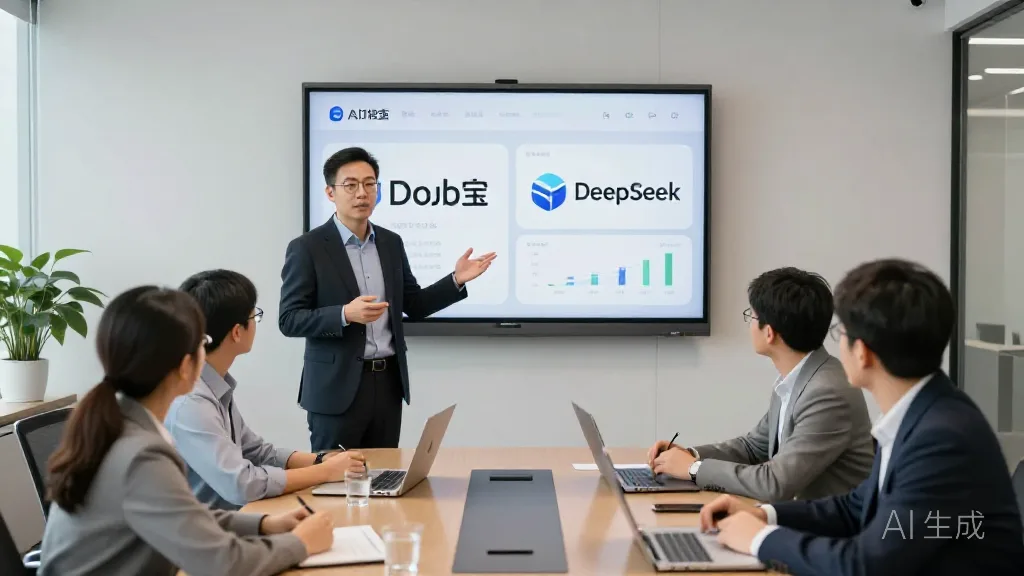
今日同青藤互動嘅團隊傾偈,話題係 GEO——Generative Engine Optimization,AI 時代嘅品牌營銷。傾完之後我確信一件事:GEO 正在成為企業嘅必選項,唔係可做可不做,係唔做就落後。
先睇三組 2026 年數據:AI 原生 APP 月活用戶 4.99 億,按年增長 85.4%;豆包、月問、DeepSeek 係第一梯隊;近八成消費者喺做購買決策之前會主動問 AI 工具。全球零點擊搜索比例已接近七成,傳統搜索引擎流量預計減少兩成半。
但係一個普遍現象:企業投入大量資源做 GEO,發咗大量內容,三個月後打開豆包、DeepSeek、元寶一搜,AI 依然唔推薦自己。
青藤互動喺服務客戶嘅過程入便發現,企業自己做 GEO 效果唔好,通常唔係因為工具唔行,而係踩咗五個致命誤區。踩一個就白做。
第一:把 GEO 當 SEO 做,以為發得多就會被收錄

圖片由 AI輔助創作(Z-Image-Turbo)Image by AI (Z-Image-Turbo)
現象:企業安排員工每日批量生成文章,多平台分發。內容高度雷同,換幾個詞就發。三個月過去,AI 提及率為零。
原因:SEO 嘅邏輯係數量加關鍵詞密度,GEO 嘅邏輯係信任信號加用戶意圖匹配。AI 唔睇你發咗幾多,AI 睇你讲嘅嘢值唔值得信。批量生產嘅同質化內容,喺 AI 眼入便係噪音唔係信號。
DeepSeek 引用機制實測數據:語義相關性四成、信源權威性三成半、用戶價值兩成半。一篇 T1 信源嘅內容,同三十篇 T5 信源嘅內容打分相當。呢個意味住:發三十篇低質量內容,不如發一篇高質量內容。
第二:讓 AI 自己編內容,脫離品牌真實情況
現象:企業用 AI 批量生成品牌故事、產品介紹、案例包裝。內容讀起身好流暢,但係同品牌實際情況對唔上。AI 生成嘅品牌故事連老闆自己都唔認識。
原因:AI 生成內容係喺語言層面工作,唔係喺商業現實層面理解。AI 唔知你嘅客戶點解買你,唔知你嘅銷售喺終端遇到咗咩阻力。AI 會生成睇起身合理但經唔起推敲嘅內容。呢種內容發出去,AI 自己都唔信,點會推薦?
第三:企業唔知道自己品牌嘅信息結構係咩
現象:問企業「你品牌核心資產係咩」,回答係「產品質量好、服務好、性價比高」。問「你同競品嘅區別係咩」,回答係「我哋更懂客戶」。呢啲回答喺 AI 眼入便全部係無效信息。
原因:AI 需要嘅係可驗證的事實、有數據支撐的案例、清晰嘅差異化表述、結構化嘅信息層級。大部分企業對品牌嘅理解係感覺層面,唔係信息層面。
第四:只鋪一個平台,以為全網都睇得到
AI 推薦品牌需要多源驗證。同一信息喺多個權威平台交叉出現,AI 嘅推薦權重先會提升。
各 AI 平台信源偏好唔同:DeepSeek 偏好知乎、CSDN、博客園;豆包偏好今日頭條、搜狐;元寶偏好公眾號深度長文;Kimi 偏好 36 氫、虎嗅。
第五:期望短期見效,做一個月就想問點解仲未有效果

圖片由 AI輔助創作(Z-Image-Turbo)Image by AI (Z-Image-Turbo)
現象:企業做 GEO 一個月,每日問「AI 點解仲未推薦我」。發覺冇效果,就停咗。然後得出結論:GEO 冇用。
原因:品牌 GEO 係信任積累,唔係流量投放。信任需要時間:AI 需要反覆睇到你嘅內容、交叉驗證、確認一致性。通常一至三個月開始出現 AI 提及,三至六個月形成穩定推薦。
品牌 GEO 就係種樹。今日種落去,明日淋一次水,後日就想乘涼——不可能。但係如果你持續淋水、施肥、修剪,三個月後樹就開始生長,一年後就能夠遮陰。唔好燒水燒到八十度就熄火。
青藤互動五步服務閉環
- AI 可見性診斷:喺豆包、DeepSeek、元寶搜行業關鍵詞,睇 AI 而家點理解你嘅品牌
- 品牌信息審計:梳理核心資產——創始人故事、品牌故事、產品亮點、客戶案例
- 策略制定:明確目標場景、主攻平台、規劃內容方向
- 內容創作與分發:人帶 AI 寫內容,多平台分發,持續更新
- 效果追蹤與迭代:每月監測 AI 提及率變化,持續優化
企業 GEO 自查行動指南
打開豆包、DeepSeek、元寶,輸入你所在行業嘅核心關鍵詞,睇睇 AI 嘅回答入便有冇你嘅品牌。出現以下六種情況,就必須重視 GEO:
- 搜唔到自己——必須做
- 搜到咗但信息好少、冇說服力——要做 GEO 強化
- 搜到咗但全係競品信息,自己排後面——要做 GEO 搶占
- 搜到咗但內容陳舊、唔準確——要做 GEO 更新
- 搜到咗但只有負面或無關信息——要做 GEO 覆蓋
- 搜到咗但 AI 回答入便根本冇提到你——要做 GEO 植入
結論
GEO 唔係 SEO 嘅升級版,佢係品牌喺 AI 時代嘅一次認知重構。
企業自己做 GEO 效果唔好,唔係因為工具唔行,而係因為認知唔啱。AI 唔係搜索引擎,AI 係信任機器。你發咩唔重要,AI 信咩先至重要。
品牌 GEO 嘅本質,係把你品牌嘅真實價值,翻譯成 AI 能讀懂、能信任、能推薦嘅信息結構。
你嘅品牌,喺 AI 嘅答案入便嗎?

【Zheng Ge's Take】
Today I talked with the team from Qingteng Interactive about GEO — Generative Engine Optimization — the new brand marketing for the AI era. After our conversation, I'm convinced: GEO is becoming a must-do for businesses, not optional.
Three 2026 numbers: 499 million monthly active AI native app users, up 85% year-on-year. Doubao, Tongyi, and DeepSeek lead the first tier. Nearly 80% of consumers now consult AI tools before making purchase decisions. Global zero-click search rates approach 70%, traditional search traffic expected to drop 25%.
But here's the common pattern: companies invest heavily in GEO, publish tons of content, and three months later open Doubao or DeepSeek to search — AI still doesn't recommend them.
Qingteng Interactive found that the reason most GEO campaigns fail isn't bad tools — it's five fatal misconceptions. Hit one, and your effort is wasted.
One: Treating GEO Like SEO, Thinking Volume Wins
The phenomenon: companies have staff mass-produce articles daily, post across multiple platforms. Content is nearly identical — just swap a few keywords. Three months later, zero AI mentions.
Why: SEO logic is volume plus keyword density. GEO logic is trust signals plus user intent matching. AI doesn't care how much you published, AI cares whether what you said is worth trusting. Mass-produced homogeneous content is noise, not signal.
Two: Letting AI Generate Content Detached From Real Brand Facts
The phenomenon: companies use AI to mass-generate brand stories, product descriptions, case studies. The content reads smoothly but doesn't match the brand's actual reality. AI-generated brand stories that even the founder doesn't recognize.
Why: AI generates at the language layer, not the commercial reality layer. AI doesn't know why your customers buy from you, doesn't know what resistance your sales team meets in the field. AI produces content that looks reasonable but can't withstand scrutiny. Publish that, and AI doesn't even trust it — why would it recommend it?
Three: Companies Don't Know Their Brand's Information Structure
The phenomenon: ask a company "what's your brand's core asset?" and the answer is "our product quality is good." Ask "how do you differ from competitors?" and the answer is "we understand customers better." These answers are all invalid information in AI's eyes.
Why: AI needs verifiable facts, data-backed cases, clear differentiated statements, and structured information hierarchy. Most companies understand their brand at the feeling level, not the information level.
Four: Only Covering One Platform, Thinking the Whole Web Will See It
AI recommends brands through multi-source verification. The same information appearing across multiple authoritative platforms is what raises AI's recommendation weight.
Different AI platforms have different source preferences: DeepSeek favors Zhihu, CSDN, and CNBlogs. Doubao favors Toutiao and Sohu. Yuanbao favors in-depth WeChat public account articles. Kimi favors 36Kr and Huxiu.
Five: Expecting Short-Term Results, Quitting After One Month
The phenomenon: company runs GEO for one month, asking daily "why hasn't AI recommended me yet?" Sees no results, stops. Concludes GEO doesn't work.
Why: Brand GEO is trust accumulation, not traffic advertising. Trust takes time — AI needs to see your content repeatedly, cross-verify, confirm consistency. Typically one to three months for first AI mentions, three to six months for stable recommendations.
GEO is like growing a tree. Plant it today, water it once tomorrow, expect to rest in its shade the day after — impossible. But keep watering, fertilizing, and pruning, and in three months the tree starts growing. One year later, shade arrives. Don't boil water to eighty degrees and then turn off the stove.
Qingteng Interactive's Five-Step Service Loop
- AI Visibility Diagnosis: Search industry keywords on Doubao, DeepSeek, Yuanbao — see how AI currently understands your brand
- Brand Information Audit: Sort core assets — founder story, brand story, product highlights, customer cases
- Strategy Development: Define target scenarios, primary platforms, content direction
- Content Creation and Distribution: Human guides AI to write content, multi-platform distribution, continuous updates
- Performance Tracking and Iteration: Monthly AI mention rate monitoring, continuous optimization
Enterprise GEO Self-Check Guide
Open Doubao, DeepSeek, Yuanbao, enter your industry's core keywords, and see if your brand appears in AI's answers. If any of these six apply, GEO is urgent:
- Can't find yourself — must do GEO
- Found but information is thin and unconvincing — strengthen GEO
- Found but competitors dominate — seize GEO territory
- Found but content is stale and inaccurate — update via GEO
- Found but only negative or irrelevant info — cover via GEO
- Found but AI doesn't mention you — plant via GEO
Conclusion
GEO is not an upgraded version of SEO — it is a cognitive reconstruction for brands entering the AI era.
Companies fail at GEO not because tools are bad, but because the mindset is wrong. AI is not a search engine. AI is a trust machine. What you publish doesn't matter. What AI trusts is what matters.
The essence of brand GEO is translating your brand's real value into an information structure that AI can read, trust, and recommend.
Is your brand in AI's answer?