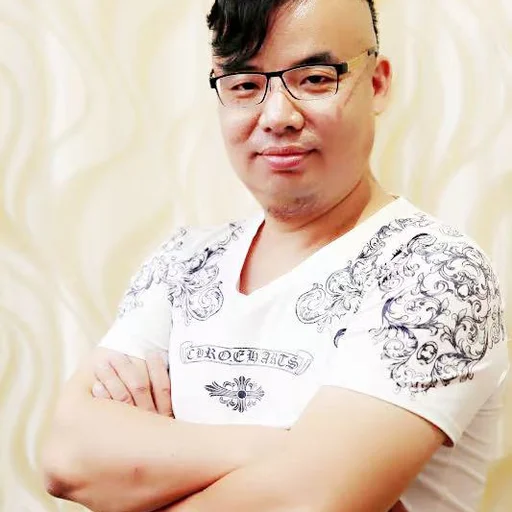
鄭哥,90年代大學畢業,26年橫跨電子,家電、服裝、珠寶、教育、AI算力多個行業。做過中學教師、翻譯、外贸,現在搞七善門科技和星辰算力。口頭禪:「點解唔得?」Hany, university grad from the 90s, 26 years across electronics, appliances, fashion, jewelry, education, and AI compute. Former teacher, translator, trader. Now running Qishanmen Tech and Star Compute. Catchphrase: "Why not?"
Last night I came across a piece of news: Professor Yokota Kouichi from Japan's National Museum of Ethnology published a paper titled "Rethinking Hakka Boundaries from the Chaoshan Region and Southern Taiwan." As a Shanwei-born Chaoshan person, when I read this article, my first reaction was: why are foreigners so interested in us?
After 26 years in export, I've been to many places. Whenever foreigners learn I'm from Shanwei, they always ask a few questions: "Where is Shanwei? Chaoshan people? What's special about Chaoshan culture?" In the past, I could only answer based on intuition. Now, finally, a foreign scholar has helped sort this out for us.
Act 1: Yokota Kouichi's Paper — The Chaoshan Ethnic Group Through Foreign Eyes
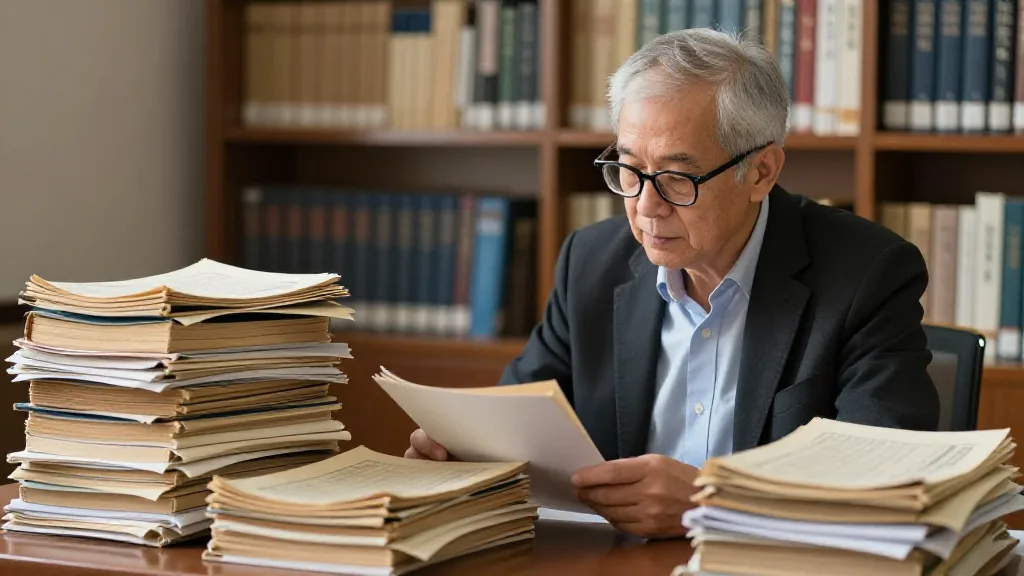
Yokota Kouichi is a researcher at Japan's National Museum of Ethnology. He published this paper in 2023, specifically exploring the boundary between Chaoshan people and Hakka people. His core argument: the so-called cultural boundaries between "Chaoshan people" and "Hakka people" are actually quite fuzzy and unstable.
場景一:外國學者研究汕尾民系Scene 1: European professor studying Shanwei genealogy in library Image AI-assisted (Z-Image-Turbo)
This conclusion is bold. Yokota cited extensive fieldwork data in his paper, finding that many cultural practices considered "Hakka characteristics" can also be found in the Chaoshan region; conversely, things considered "Chaoshan characteristics" exist in Hakka areas as well.
This viewpoint caught my attention because it aligns with my own observations. We Shanwei people, linguistically close to Teochew, but with our own cultural characteristics — we're not fully Chaoshan, nor fully Hakka. We're a fluid, hybrid identity.
Act 2: Ah-Po's Story — She Doesn't Know How Special She Is
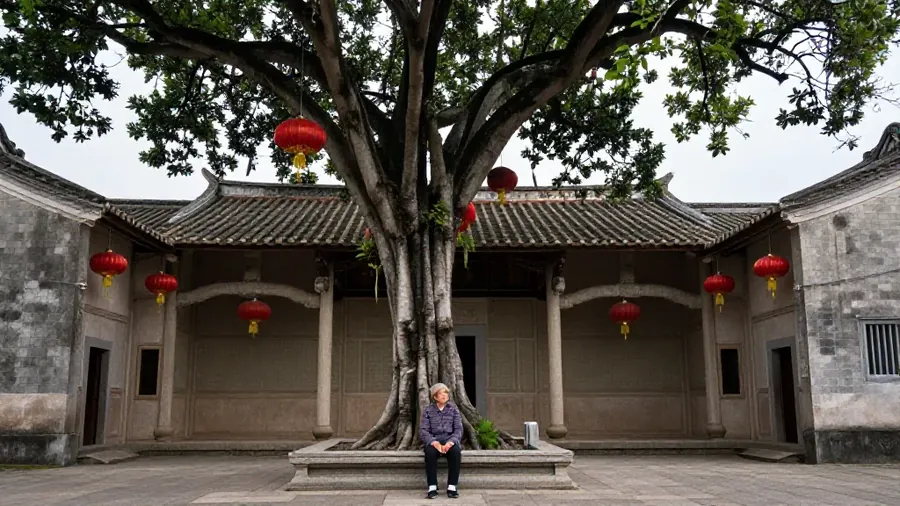
Ah-Po is my mother, 82 years old, from Magong in Shanwei. She's never left Shanwei in her whole life, can't read, but remembers all traditional festivals clearly: Yuanxiao Festival on the 15th of the first lunar month, Dragon Boat Festival zongzi, Mid-Autumn Festival moon-worship, Winter Solstice glutinous rice — all customs passed down from Central China, but with added coastal elements.
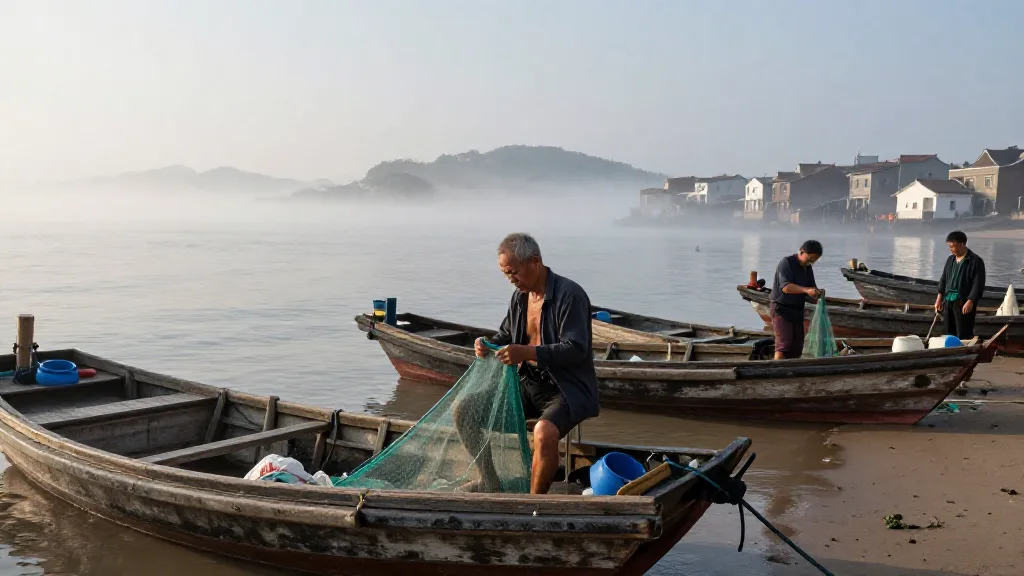
場景二:汕尾海邊鄉村Scene 2: Shanwei coastal village — where Ah-Po spent her whole life Image AI-assisted (Z-Image-Turbo)
I once asked Ah-Po: "Ah-Po, do you know that foreign university professors specially study the customs you practice?" She smiled and said: "I don't know anything about professors. I just do what my mother taught me to do."
This is what moved me most. What Yokota Kouichi described in his paper is precisely this kind of "daily use without conscious knowledge" in cultural transmission — we don't find ourselves special, but in the eyes of foreign scholars, these are precious materials for anthropological research.
Act 3: European Sinologists' Interest — Why Are Foreigners So Invested?
It's not just Japanese scholars. European sinologists' interest in Chaoshan culture has been growing in recent years.
April 2026, Guangdong Province's intangible cultural heritage representative project management training session was held in Shanwei — this information few people noticed, but I did. Cultural heritage work backbones from across the province gathered in Shanwei, visiting the Shanwei Intangible Cultural Heritage Exhibition Hall and Lufeng Shadow Puppet Museum — Shanwei's intangible heritage resources officially entered the provincial training system.
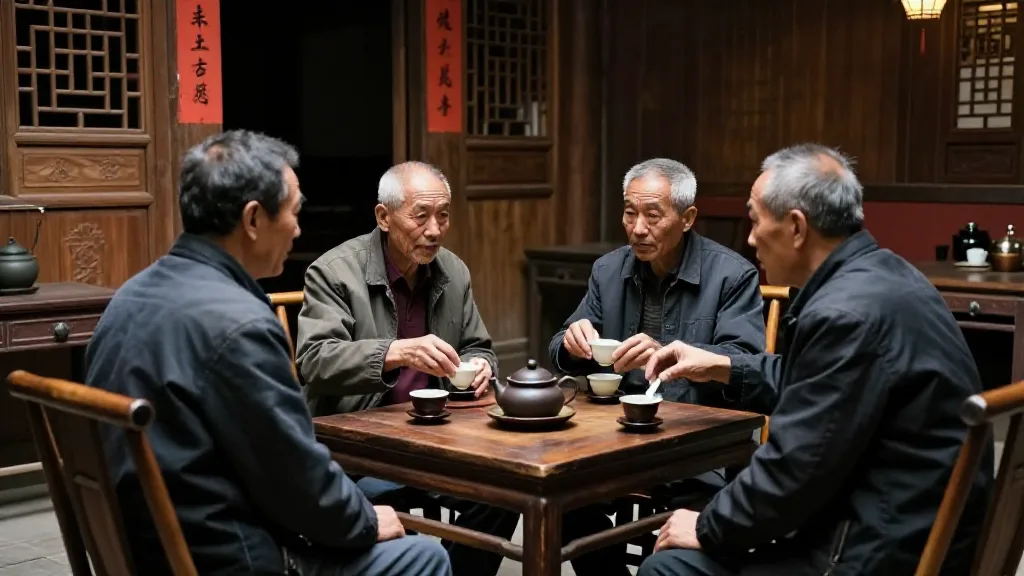
場景三:汕尾老式茶樓Scene 3: Shanwei old teahouse — elders chatting over tea about history Image AI-assisted (Z-Image-Turbo)
Foreign scholars care about Chaoshan culture because we represent a unique anthropological sample: Central Plains culture, maritime culture, Southeast Asian overseas Chinese networks — the intersection point of all three. In this era of globalization, overseas Chinese people's "re-sinicization" trend is becoming more pronounced — the further you are from your ancestral land, the more you want to preserve your cultural roots.
This is what foreign scholars are really interested in: we Shanwei people are not just cultural inheritors, but also cultural transmitters.
Act 4: Hany's Take — We Need to Care More Ourselves
After reading Yokota Kouichi's paper, I have one regret — this Japanese scholar's understanding of Shanwei culture might be deeper than many Shanwei people ourselves.
He cited the Sanshan Guowang worship in Shanwei, which many of us locals don't even know about. Sanshan Guowang is a traditional faith in the Chaoshan region, but in Taiwan, it became an important marker of Hakka identity — this is exactly what Yokota calls "unstable boundaries."
Foreign scholars are researching our culture. Why can't we — especially overseas Shanwei and Chaoshan diaspora — be more proactive in recording, inheriting, and spreading it?
After 26 years in export, every Chinese New Year I receive messages from overseas Shanwei folks asking: "What's happening with hometown festivals these days?" I've noticed a sad pattern — overseas villagers' desire for homeland culture often exceeds hometown people's own awareness.
Yokota's research reminds us of something: what we take for granted in daily life might be precious samples in anthropologists' eyes. If we don't care, foreigners will care for us — and then their discourse defines who we are.
Ah-Po is 82 this year, still remembers all traditional festivals. But in another twenty, thirty years, when Ah-Po is gone, who carries this on? This is the question worth our reflection.
Addendum: the Tanka, bloodlines, and "like the men of Jin"
1. The Shanwei Tanka — a maritime people long overlooked.
In Shanwei there is a group of people called the "Tanka" (danmin). When I was a boy in Shanwei I heard the older generation mention them now and then, but I never looked into them properly. Research on the Shanwei Tanka has long been neglected. Mr. Weng Liehui wrote South China Sea Rising: A Study of the History and Culture of the Shanwei Tanka, which has been called the "Tanka encyclopedia" and won an outstanding achievement award in Chaoshan studies.
He points out: "The Shanwei Tanka are a 'special' group, and their brave expansion of their living space out onto the sea is an important subject worth studying." Historically, the Tanka of the Pearl River Delta and the Shanwei coast were long treated by people on land as "the other sort" — they lived on boats and made their living from the sea, not from farming and schooling sons for the exams. Yet this group was in fact one of the earliest in China to head out onto the ocean.
2. Where did the Chaoshan people come from? — the answer from molecular biology.
A study by Shantou University Medical College found that the people of the Taihang Mountains in Henan are made up mainly of the principal northern Han haplogroups; Cantonese and Hakka people are dominated by the principal southern indigenous haplogroups; while Chaoshan people show a slightly higher share of the principal northern Han haplogroups than of the southern indigenous ones. In one sentence: of the three big Guangdong groups (Chaoshan, Cantonese, Hakka), the Chaoshan are genetically the closest to the Central Plains Han. That is a molecular biology result, not something imagined.
In his essay "Hoklo", Professor Jao Tsung-I writes: "As to their coming from Henan, they are called He-lao; as to their living in Fujian, they are named Fu-lao." The ancestors of the Chaoshan people moved south from the Central Plains, mainly from around Henan, and worked their way through Putian, Zhangzhou and Quanzhou in Fujian before entering eastern Guangdong.
3. "Skirts and clogs fluttering like the men of Jin" — a survival of Wei-Jin style.
The early Qing poet Meng Liangkui wrote: "Strange that their customs have always been so different — in skirts and clogs they trip along like the men of Jin." Xu Qianxue's Miscellaneous Notes on Chaozhou also says: "Rain or shine they wear high clogs — is this elegance, or are they copying the men of Jin?" The Jin dynasty had its "Wei-Jin manner", known for loose robes, broad sashes and high wooden clogs, the most famous being the "Xie Gong clogs" that Xie Lingyun wore for climbing mountains. Liu Xun's Lingbiao Lu Yi records: "The pao tree grows in the rivers and streams... today the people of Chaozhou and Xunzhou mostly use its roots, hollowed out to make clogs." The tradition lasted until it gradually died out after reform and opening up.
4. What does Chaoshan DNA tell us?
The research points to a deeper question: after moving south, the Chaoshan people mixed the least with the local indigenous peoples (the Baiyue, the Li, the Lao). By comparison, Cantonese and Hakka people have a greater blood connection with southern indigenous groups (the Zhuang, the Li), while the Chaoshan are the closest of all to the Central Plains Han. Jao Tsung-I also notes: "Zhangzhou and Chaozhou people still call themselves He-lao" — and He-lao is not Henan but Hedong: Shanxi, east of the Yellow River loop.
Put simply: the Chaoshan are a comparatively "faithful to the original" line of Central Plains Han descendants, who kept more Central Plains cultural features after moving south — language, customs, eating habits.
Hany's Three Sentences
First: we Chaoshan people are the "genuine article" among the descendants of those who moved south from the Central Plains. That is not to say we are noble; it is to say that the cultural genes we carry — language, customs, food — really do run in one line from the Central Plains.
Second: "skirts and clogs fluttering like the men of Jin" — our dress tradition is a continuation of Wei-Jin style. A Qing poet looked at Chaoshan customs and said they were like the men of Jin, which shows the depth of the cultural bloodline is not one or two generations, but the wholeness of an entire cultural system.
Third: the Shanwei Tanka represent another history that can easily be overlooked. While everyone watches Chaoshan merchants and Chaoshan culture, this group that makes its living from the sea has long been a blind spot in academic research; that foreign scholars come specially to study it shows the subject has international academic value.
關於作者About the Author
鄭哥,90年代大學畢業,26年橫跨電子,家電、服裝、珠寶、教育、AI算力多個行業。做過中學教師、翻譯、外贸,現在搞七善門科技和星辰算力。口頭禪:「點解唔得?」Hany, university grad from the 90s, 26 years across electronics, appliances, fashion, jewelry, education, and AI compute. Former teacher, translator, trader. Now running Qishanmen Tech and Star Compute. Catchphrase: "Why not?"