鄭哥,90年代大學畢業,26年橫跨電子,家電、服裝、珠寶、教育、AI算力多個行業。做過中學教師、翻譯、外贸,現在搞七善門科技和星辰算力。口頭禪:「點解唔得?」Hany, university grad from the 90s, 26 years across electronics, appliances, fashion, jewelry, education, and AI compute. Former teacher, translator, trader. Now running Qishanmen Tech and Star Compute. Catchphrase: "Why not?"
A friend in a top internet company working on LLMs told me: "Zheng Ge, I'm telling you, anyone getting into GPUs now might really be a sucker."
But at the same time, the news I see is:
JD.com announced the purchase of 100,000 Moore Threads GPUs; DeepSeek plans to procure 160,000 Huawei Ascend 950DT chips; Tencent's half-year report shows a significant increase in compute procurement in Q3; Moore Threads H1 revenue of 1.736 billion RMB, up 147% YoY — stock price and performance all trending up.
My friend says "sucker," big factories say "buy decisively." Who's right?
Act 1: Behind the Numbers — Chinese Internet Giants Lighting the AI Compute Arms Race
JD.com — Moore Threads: 100,000-card full-function GPU cluster targeting LLM training, inference, and embodied intelligence
DeepSeek — Huawei: Inner Mongolia data center, planned power reaching gigawatt level, at least 160,000 Ascend 950DT chips
Moore Threads: H1 revenue 1.736B RMB, up 147% YoY, net loss narrowed 95.73%, non-GAAP net profit turned positive
CICC estimate: Chinese top tech enterprises' 2026-2027 capex expected to grow from $65B to $140-165B
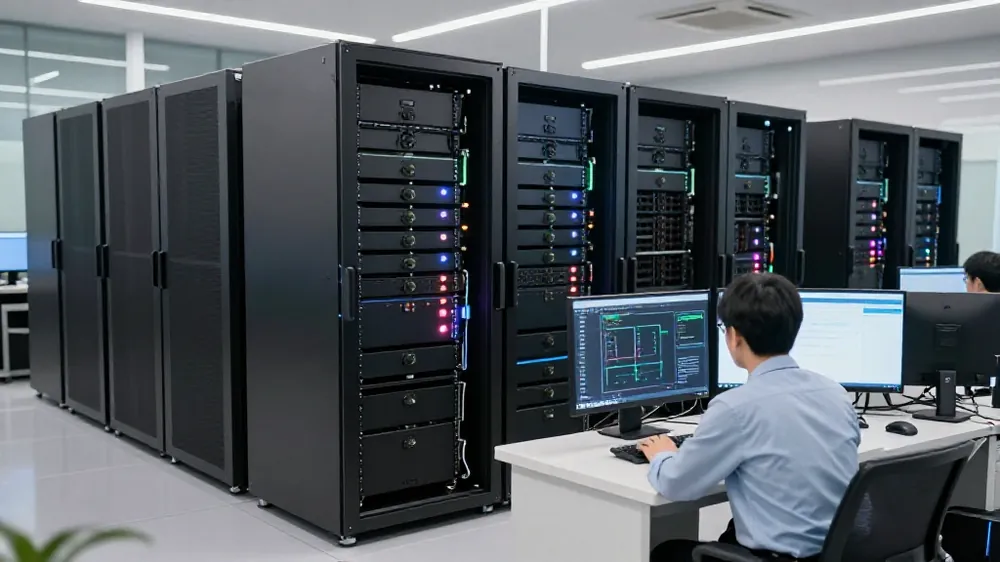
場景一:中國數據中心GPU集群Scene 1: Chinese internet giants' data center — AI compute arms race Image AI-assisted (Z-Image-Turbo)
Act 2: Friend Says "Sucker" — What's Their Logic?
Point 1: Compute investment logic is "everyone's doing it," not "making money."
"Right now big factories are buying cards not because their business really needs that much compute, but because other big factories are buying and they'll fall behind if they don't." This is FOMO — not a rational capex decision.
Point 2: Chinese companies' revenue base can't support this scale.
US top cloud vendors' 2026 capex expected to exceed $800B, potentially hitting $1T in 2027. Chinese companies' overall revenue and profit base is smaller than US peers. Every investment needs a specific business to absorb it.
US giants are "hoarding land" — lock up compute first, figure out use cases later. Chinese giants are "building factories" — every capex dollar needs a business exit.
Point 3: GPUs have a lifecycle, 3-5 years and they're outdated.
"The cards bought now, by 2028-2029 when the next generation chips come out, what happens to these?" Chip upgrade cycles are roughly 3-5 years. If you enter at a high point now, the technology gap in five years means residual value could be far below book value.
Act 3: The Bull Case — This Isn't Being a Sucker, It's Capturing Position
Moore Threads H1 revenue up 147%, net profit turned positive — these numbers aren't hype.
More critically: Moore Threads has already proven large-scale cluster engineering.
Based on MTT S5000 cluster, trained a 236B MoE foundation model with 25 trillion tokens from scratch
Peking University's 5D world model "EvoPhys-World", ranked #1 on Stanford WorldScore for 37 consecutive days
Training accuracy on par with international mainstream compute cards, loss curves highly consistent
Training linear scaling efficiency 95%, effective training time ratio over 90%
JD.com: "We're not buying because of policy, we're buying because our business really needs it." JD has a complete retail, logistics, warehouse, and delivery chain — compute enters warehouses, distribution stations, supply chain, robotics systems — the business logic is closed-loop.
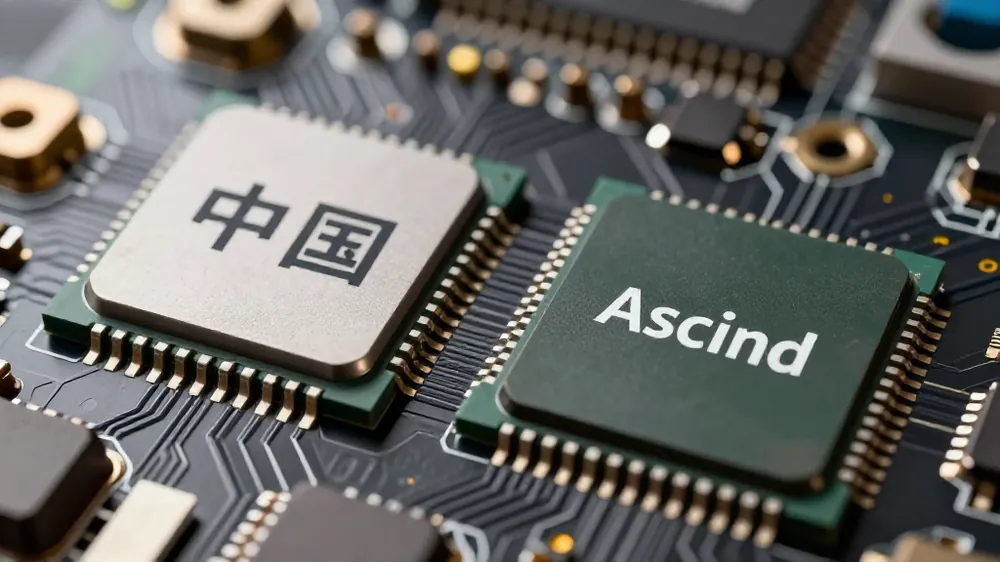
場景三:中國AI芯片——摩爾线程與華為昇騰Scene 3: Chinese AI chips — Moore Threads and Huawei Ascend Image AI-assisted (Z-Image-Turbo)
Act 4: The Real Question — Who's the Ultimate Payer in the Compute Arms Race?
If every big factory is buying cards because of FOMO, who's ultimately paying for this compute?
Only three possibilities:
Option 1: Wool comes from sheep — AI applications truly explode, enterprises pay for AI services, compute costs are shared down the chain. This is the ideal outcome, but AI application monetization paths are still being explored.
Option 2: Wool comes from pigs — free AI users are actually part of monetization, advertising revenue covers compute costs. This is most big factories' current business model, but user growth is plateauing and ad revenue growth is slowing.
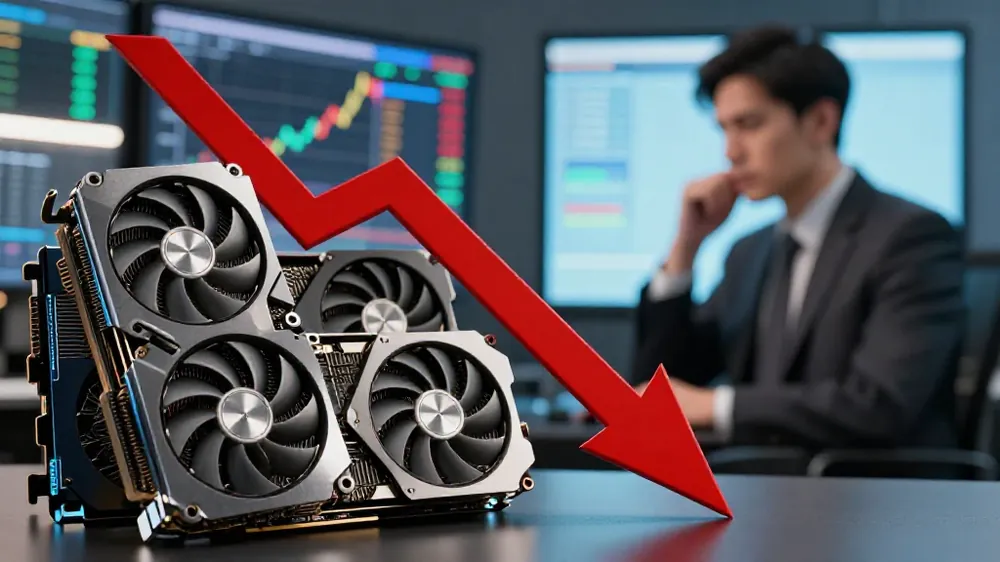
Option 3: Compute sinks — demand falls short of expectations, some compute becomes idle assets, suckers appear. This is what my friend fears most.
Act 5: Zheng Ge's Take — Why Is This Situation So Complex?
The optimistic side: Chinese AI model API calls have ranked #1 globally for 19 consecutive weeks, four of the top five globally are Chinese AI LLMs. JD, Tencent, Alibaba, ByteDance — each has its own closed-loop business. Moore Threads and Huawei Ascend — products have genuinely been proven, not just PowerPoint anymore.
The worrying side: "Many companies are buying cards not because they're making money, but because they're afraid of falling behind." This logic has repeated throughout business history — 2000 dot-com bubble, 2017 crypto mining boom. Every cycle, someone makes money and someone becomes a sucker.
Zheng Ge's Three Points
Point 1: Compute investment has risks, but not investing has bigger risks. AI is the next industrial revolution, most agree on this. The question isn't "whether," it's "how much" and "when to enter."
Point 2: China's compute problem isn't technology, it's application monetization. At the technology level, Moore Threads and Huawei Ascend have proven themselves; the problem is downstream applications — who's paying for AI services? Until this question is answered, upstream compute capacity is building castles on sand.
Point 3: The "sucker" argument is a wake-up call. Don't enter because of FOMO, enter because of real business needs. JD bought 100,000 cards because JD itself has retail, logistics, and robotics business needs; if you're a regular company hearing "GPUs will definitely appreciate" and rushing in, then you really are a sucker.
One-Line Summary
Friend says "buying GPUs might make you a sucker" — this concern has merit, but it's not the whole story. Compute investment depends on who you are: JD buying 100K cards is strategic positioning; a regular company following the trend is a sucker. The core question isn't whether GPUs are expensive, it's whether whoever buys your compute ultimately pays for it.
關於作者About the Author
鄭哥,90年代大學畢業,26年橫跨電子,家電、服裝、珠寶、教育、AI算力多個行業。做過中學教師、翻譯、外贸,現在搞七善門科技和星辰算力。口頭禪:「點解唔得?」Hany, university grad from the 90s, 26 years across electronics, appliances, fashion, jewelry, education, and AI compute. Former teacher, translator, trader. Now running Qishanmen Tech and Star Compute. Catchphrase: "Why not?"